Resources
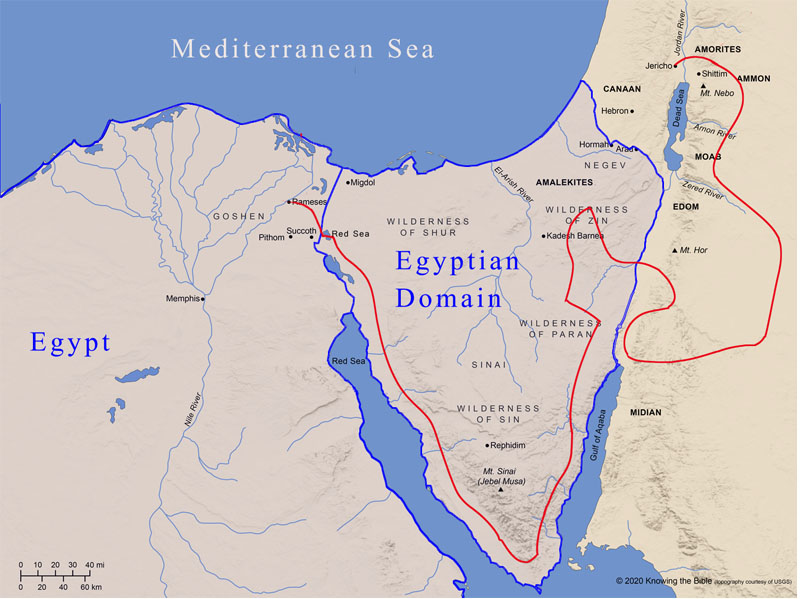
Israelite Journeys
Rameses
Succoth
Etham
Pi-hahiroth
By the Red Sea
Wilderness of Etham
Marah
Elim
By the Red Sea
Wilderness of Sin
Dophkah
Alush
Rephidim
Wilderness of Sinai
Kibroth-hattaavah
Hazeroth
Rithmah
Rimmon-perez
Libnah
Rissah
Kehelathah
Mount Shepher
Haradah
Makheloth
Tahath
Terah
Mithkah
Hashmonah
Moseroth
Bene-jaakan
Hor-haggidgad
Jotbathah
Abronah
Ezion-geber
Kadesh
Mount Hor
Zalmonah
Punon
Oboth
Iye-abarim
Dibon-gad
Almon-diblathaim
Abarim
Moab
Beth-jeshimoth
Abel-shittim
Historically, leprosy was a catch-all term for various skin diseases from psoriasis, fungal infections, syphilis, skin cancers or Hansen's disease. It was interpreted as a "living death" because it caused visible, disfiguring, and often rotting symptoms.
In the Old Testament Leprosy was often interpreted as a direct punishment from God for sins such as arrogance, disobedience, or slander. It was seen as a symbol of divine judgment, a disease of the soul that manifested outwardly. A person diagnosed with leprosy was often subjected to a "Leper Mass", a funeral-like ceremony that declared them legally dead to society. They lost their property, were forced to wear special clothing, and often had to carry a bell or clapper to warn others of their approach. By the later Middle Ages, attitudes slowly shifted toward seeing the sick as in need of care, although the stigma remained.
A priest could not heal the lepers but if God healed the individual, various rules, rites, ceremonies, and sacrifices had to be performed in order to restore all the person's privileges and allow him back into the fellowship of the living members of the covenant nation. When Jesus healed a leper in the New Testament, He gave him the following instructions:
Luke 5:14 "Do not tell anyone," Jesus instructed him. "But go, show yourself to the priest and present the offering Moses prescribed for your cleansing, as a testimony to them."
These are the instructions that Moses prescribed:
Leviticus 14:1 Then the LORD said to Moses, "This is the law for the one afflicted with a skin disease on the day of his cleansing, when he is brought to the priest. The priest is to go outside the camp to examine him, and if the skin disease of the afflicted person has healed, the priest shall order that two live clean birds, cedar wood, scarlet yarn, and hyssop be brought for the one to be cleansed.
The first part of the purification process began some place outside the camp, or city because individuals with infectious skin diseases were required to live isolated outside the city boundaries, the initial stage of their cleansing ritual began there. A priest would travel to that location to examine the person and, upon confirming they were fully healed, initiate the purification process.
Leviticus 14:5 Then the priest shall command that one of the birds be slaughtered over fresh water in a clay pot. And he is to take the live bird together with the cedar wood, scarlet yarn, and hyssop, and dip them into the blood of the bird that was slaughtered over the fresh water. Seven times he shall sprinkle the one to be cleansed of the skin disease. Then he shall pronounce him clean and release the live bird into the open field.
The first clean bird, such as a turtle dove or pigeon, was held over a clay pot which held pure, fresh water from a spring, creek or river. The blood was allowed to drain into the water. The second bird and the hyssop branch was attached to the cedar wood by the scarlet yarn. Afterwards, the live bird was dipped into the blood-water and sprinkled seven times on the healed person. The priest would declare the individual clean and let the blood-stained bird fly away.
The two birds function symbolically similarly to the two goats in Leviticus 16 (Day of Atonement). In both rituals, one animal is slain to signify substitutionary death for sin or impurity, while the second is released to signify the removal of that sin/impurity and freedom. The oil and aromatic nature of the cedar, paired with hyssop, may have provided an antimicrobial or purifying, aromatic element to the cleansing process. The scarlet yarn represented blood, which symbolizes the life that has been restored to one previously considered "dead" due to leprosy.
Leviticus 14:8 The one being cleansed must wash his clothes, shave off all his hair, and bathe with water; then he will be ceremonially clean. Afterward, he may enter the camp, but he must remain outside his tent for seven days. On the seventh day he must shave off all his hair—his head, his beard, his eyebrows, and the rest of his hair. He must wash his clothes and bathe himself with water, and he will be clean.
Following any form of ritual impurity, washing garments served as a purification rite to remove defilement. To ensure complete cleansing and prevent a return to an unclean state, a priest would shave all the hair from the person's entire body. The shaving was considered incomplete if even a couple of hairs remained. This thorough removal of hair is similar to the Nazirite vow, where shaving signifies total dedication to God.
Although the individual is restored to the camp, he was not allowed to enter his own home for seven days in case some of his leprosy might still be lurking and infect the family. After that he was to shave his body and bathe a second time.
Leviticus 14:10 On the eighth day he is to bring two unblemished male lambs, an unblemished ewe lamb a year old, a grain offering of three-tenths of an ephah of fine flour mixed with olive oil, and one log of olive oil. The priest who performs the cleansing shall present the one to be cleansed, together with these offerings, before the LORD at the entrance to the Tent of Meeting.
The second part of the ritual was performed in the court of the tabernacle. Three lambs were sacrificed, one for a guilt (or trespass) offering, another for a burnt offering, and the third for a purification (or sin) offering.
Leviticus 14:12 Then the priest is to take one of the male lambs and present it as a guilt offering, along with the log of olive oil; and he must wave them as a wave offering before the LORD. Then he is to slaughter the lamb in the sanctuary area where the sin offering and burnt offering are slaughtered. Like the sin offering, the guilt offering belongs to the priest; it is most holy.
While a grain offering was typically not part of the trespass offering rituals, the cleansing of a leper served as a specific exception where a grain offering was mandatory. A "log" is equal to six hen's eggs.
Leviticus 14:14 The priest is to take some of the blood from the guilt offering and put it on the right earlobe of the one to be cleansed, on the thumb of his right hand, and on the big toe of his right foot. Then the priest shall take some of the log of olive oil, pour it into his left palm, dip his right forefinger into the oil in his left palm, and sprinkle some of the oil with his finger seven times before the LORD. And the priest is to put some of the oil remaining in his palm on the right earlobe of the one to be cleansed, on the thumb of his right hand, and on the big toe of his right foot, on top of the blood of the guilt offering.
The application of blood on the ear, thumb and toe signifies that the entire person purified after healing, allowing them back into the community. This is similar to the ceremony Moses used when he ordained Aaron and his sons who were also purified before they could represent the community. Both rituals involve atonement, where the blood cleanses the person from impurity—either physical (leprosy) or ritualistic (sin)—making them holy and fit for God's presence. While the blood cleanses from sin/uncleanliness, the oil served as tangible symbol and practical agent of sanctification.
Leviticus 14:18 The rest of the oil in his palm, the priest is to put on the head of the one to be cleansed, to make atonement for him before the LORD. Then the priest is to sacrifice the sin offering and make atonement for the one to be cleansed from his uncleanness. After that, the priest shall slaughter the burnt offering and offer it on the altar, with the grain offering, to make atonement for him, and he will be clean.
The priest applies remaining oil to the person's head is to seal their ceremonial cleansing and atonement. The person is now transition from an outcast to a member in good standing, affirming their restored dignity and allowed back into the community.
Leviticus 14:32 This is the law for someone who has a skin disease and cannot afford the cost of his cleansing."
While he law required full atonement for everyone, if one could not afford three lambs, one ram and two birds could be substituted. Both procedures required the guilt offering, the application of blood to the ear, thumb, and toe, and the use of oil to ensure complete ceremonial cleansing and restoration to the community.
Leviticus 14:21 If, however, the person is poor and cannot afford these offerings, he is to take one male lamb as a guilt offering to be waved to make atonement for him, along with a tenth of an ephah of fine flour mixed with olive oil for a grain offering, a log of olive oil, and two turtledoves or two young pigeons, whichever he can afford, one to be a sin offering and the other a burnt offering.
Leviticus 14:23 On the eighth day he is to bring them for his cleansing to the priest at the entrance to the Tent of Meeting before the LORD. The priest shall take the lamb for the guilt offering, along with the log of olive oil, and wave them as a wave offering before the LORD.
Leviticus 14:25 And after he slaughters the lamb for the guilt offering, the priest is to take some of the blood of the guilt offering and put it on the right earlobe of the one to be cleansed, on the thumb of his right hand, and on the big toe of his right foot. Then the priest is to pour some of the oil into his left palm and sprinkle with his right forefinger some of the oil in his left palm seven times before the LORD. The priest shall also put some of the oil in his palm on the right earlobe of the one to be cleansed, on the thumb of his right hand, and on the big toe of his right foot—on the same places as the blood of the guilt offering.
Leviticus 14:29 The rest of the oil in his palm, the priest is to put on the head of the one to be cleansed, to make atonement for him before the LORD. Then he must sacrifice the turtledoves or young pigeons, whichever he can afford, one as a sin offering and the other as a burnt offering, together with the grain offering. In this way the priest will make atonement before the LORD for the one to be cleansed.