Numbers 6 & 30 - Nazirite Laws
Timeline: 1451 BC
|
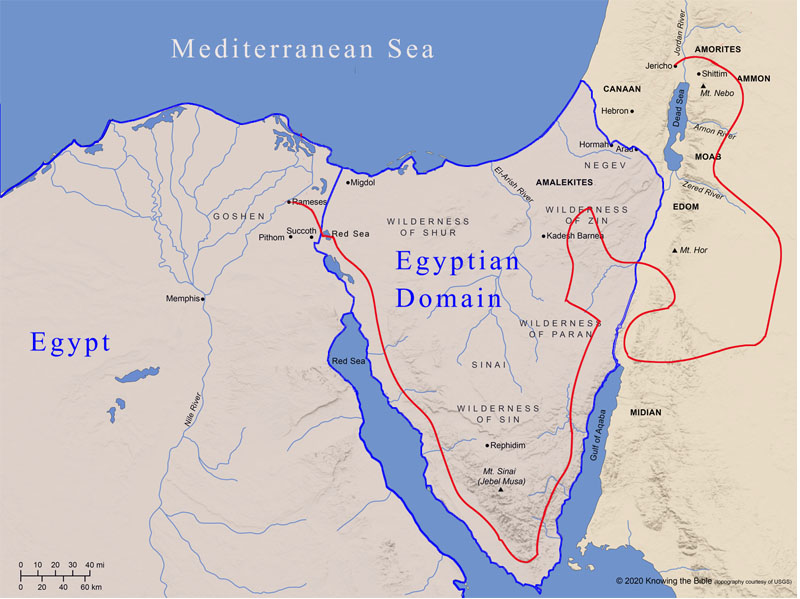
Israelite Journeys Rameses
|
Numbers 6 — The Nazirite Vow Leviticus 27 describes the rules for when an Israelite made a vow concerning a person, animal, house or land to the Lord. Vows either took the form of a promise to give something to God, such as a sacrifice, or a pledge to abstain from something. This chapter outlines the specific requirements for fulfilling a unique vow of separation to God, which carried obligations far exceeding a standard promise or pledge. The term Nazir, or Nazirite in English, means "set apart, dedicate or consecrate." This term should not be confused with Nazarene, which refers to the city of Nazareth. The Nazirite vow was a voluntary act that allowed individuals to express a unique and complete commitment to the Lord of their own free will. An Israelite could take the vow for many reasons, some of which are to fill a wish, as a way to make a sin offering, to achieve purity or to make a public statement. Numbers 6:1 And the LORD said to Moses, "Speak to the Israelites and tell them that if a man or woman makes a special vow, the vow of a Nazirite, to separate himself to the LORD; Women and slaves, who did not have full rights before the religious law, could take the Nazirite vow, but only with the consent of their husbands or owners. Numbers 30 details a woman's ability to make vows and a husband's authority to either uphold or nullify her vows, while also addressing a father's authority over a daughter's vows.
Numbers 6:3 He is to abstain from wine and strong drink. He must not drink vinegar made from wine or strong drink, and he must not drink any grape juice or eat fresh grapes or raisins. All the days of his separation, he is not to eat anything that comes from the grapevine, not even the seeds or skins. Once a person made a Nazirite vow, he was not allowed to partake any intoxicating drink, including beer or distilled spirits. The grape was a symbol of earthly pleasures and luxury, so abstaining from any product derived from the vine demonstrated a willingness to forsake worldly enjoyments and focus on their spiritual consecration to God. Numbers 6:5 For the entire period of his vow of separation, no razor shall touch his head. He must be holy until the time of his separation to the LORD is complete; he must let the hair of his head grow long. Uncut hair served as an outward demonstration to the world that the person was under a vow. Women did not normally cut their hair in ancient Jewish culture so they probably let it hang loose and kept it relatively unkempt as a public testament to their dedication and commitment. Numbers 6:6 Throughout the days of his separation to the LORD, he must not go near a dead body. Even if his father or mother or brother or sister should die, he is not to defile himself, because the symbol of consecration to his God is upon his head. Throughout the time of his separation, he is holy to the LORD. When Aaron was forbidden to mourn his sons during the consecration ceremony in order to prevent impurity from death and to uphold the holiness required for ministering to God. This same prohibition is also imposed to individuals who have taken the Nazirite vow. This limitation was only in effect during the time of their vow of separation. Numbers 6:9 If someone suddenly dies in his presence and defiles his consecrated head of hair, he must shave his head on the day of his cleansing—the seventh day. On the eighth day he must bring two turtledoves or two young pigeons to the priest at the entrance to the Tent of Meeting. And the priest is to offer one as a sin offering and the other as a burnt offering to make atonement for him, because he has sinned by being in the presence of the dead body. On that day he must consecrate his head again. He must rededicate his time of separation to the LORD and bring a year-old male lamb as a guilt offering. But the preceding days shall not be counted, because his separation was defiled. In ancient religious contexts, a person who came into contact with a dead body, regardless of whether it was intentional or a sudden accident, was considered ritually impure for seven days. This impurity interrupted any standing sacred vow. If the vow was interrupted, everything done prior to the interruption was null and void. To restore their state of holiness, they had to undergo a multi-step purification ritual which included a sin offering and a burnt offering. Shaving the head was a key symbolic part of this cleansing process, signifying renewal and a fresh beginning. This seven-day period marked the completion of their defilement, allowing them to rededicate themselves to their initial pledge with sacrifices on the eighth day. Numbers 6:13 Now this is the law of the Nazirite when his time of separation is complete: He must be brought to the entrance to the Tent of Meeting, and he is to present an offering to the LORD of an unblemished year-old male lamb as a burnt offering, an unblemished year-old female lamb as a sin offering, and an unblemished ram as a peace offering— together with their grain offerings and drink offerings—and a basket of unleavened cakes made from fine flour mixed with oil and unleavened wafers coated with oil. There were two types of Nazirite vows: lifelong and temporary. A lifelong vow was often initiated by parents before a child's birth, frequently undertaken for a significant or profound reason under special circumstances. Three well-known figures were specifically noted for being Nazirites from birth. Sampson's mother was barren and the Lord instructed her to live as a Nazirite during her pregnancy. She bore a son who became a lifelong Nazirite. Samuel's mother was barren and made a vow to God that if He gave her a son, she would dedicate him to God's service as a Nazirite. He was the prophet who anointed the first two kings of Israel and was considered by many as the greatest judge. John the Baptist was dedicated to God by his parents on instructions from a messenger of God. He lived the life of a prophet, took no wine or strong drink, set himself apart from society, and dedicated his life to God indicating he was a Nazirite. With the exception of Samson, the lifelong Nazirite was allowed to trim his hair once a year. Although Moses did not require limits assigned to the vow, a rule was later imposed that a Nazirite vow should be taken for no less than thirty days. The Apostle Paul took a temporary Nazirite vow on at least a couple of occasions and Queen Helena was also said to have taken a vow to thank God for bringing her son safely from the war. She had almost completed seven years of her vow when she was defiled and therefore had to keep it for another seven years. The vow of a Nazirite ended with an extensive public ceremony consisting of three parts; a burnt-offering, a sin-offering, together with a basket of unleavened cakes and wafers and a peace-offering. Because it was quite costly, wealthy Jews would often sponsor a poor Nazirite who had completed a vow. Paul was advised to help four Nazirites pay for their purification and offerings at the Temple in order to finish their vows. Numbers 6:16 The priest is to present all these before the LORD and make the sin offering and the burnt offering. He shall also offer the ram as a peace offering to the LORD, along with the basket of unleavened bread. And the priest is to offer the accompanying grain offering and drink offering. And the priest would perform the ritual, symbolizing the completion of their vow, thus allowing them to be reintegrated into society while also receiving a blessing from the Lord.Numbers 6:18 Then at the entrance to the Tent of Meeting, the Nazirite is to shave his consecrated head, take the hair, and put it on the fire under the peace offering. And the priest is to take the boiled shoulder from the ram, one unleavened cake from the basket, and one unleavened wafer, and put them into the hands of the Nazirite who has just shaved the hair of his consecration. The priest shall then wave them as a wave offering before the LORD. This is a holy portion for the priest, in addition to the breast of the wave offering and the thigh that was presented. After that, the Nazirite may drink wine. When a Nazirite fulfilled their vow, they would cut their hair and put the locks under the vessel in which the peace offerings were boiled as a sign that their time of dedication was over. Following this, a "wave offering" was made, which was a ritual transfer of the offering's ownership to God. Once consecrated, the offering was given back to the priest, symbolizing that God had approved the sacrifice. The person could go back to their old ways of living, including drinking wine, likely at the meal they shared with others after a peace offering. Numbers 6:21 This is the law of the Nazirite who vows his offering to the LORD for his separation, in addition to whatever else he can afford; he must fulfill whatever vow he makes, according to the law of his separation." The sacrificial requirements for a completed vow were an expensive undertaking and often wealthy Jews would sponsor a poor Nazirite who had completed a vow. However, the Nazirite may offer more than the required offering as long as it was within the person's means and given as a voluntary offering to the Lord. Aaron's Blessing The Aaronic Blessing is the oldest surviving biblical inscription in existence today. In 1979, two tiny silver scrolls about the size of a cigarette were discovered in a collapsed tomb by Dr. Gabriel Barkay and his archaeological team. These scrolls also contained verses from Deuteronomy. Numbers 6:22 Then the LORD said to Moses, "Tell Aaron and his sons: This is how you are to bless the Israelites. Say to them:
A blessing is "a favor or gift bestowed by God, thereby bringing happiness. This was a reminder of all that God has promised His people. The Hebrew word "you" is singular, not plural. While spoken publicly, it is a blessing for the individual, a way to invoke His presence and blessing on an individual's life.
This signifies God's promise to keep you from all evil, similar to a shepherd watching their flock, keeping you in a righteous covenant relationship with God.
To "shine" literally means to illuminate or give off light, similar to the start of a new day. This is a metaphor for God's presence and blessing, conveying a sense of delight, guidance, and peace, much like a warm, shining light dispelling darkness. This is a sign of divine approval. To "shine" means literally to illuminate or give off light, similar to the start of a new day. This is a metaphor for God's presence and blessing, conveying a sense of delight, guidance, and peace, much like a warm, shining light dispelling darkness.
The primary meaning for the word gracious is to treat someone with kindness and courtesy, especially in a difficult situation. May God be forgiving, show compassion and mercy.
In ancient cultures, a ruler lifting their gaze or face to a commoner was a sign of approval and goodwill. This phrase brings that cultural context to a divine level. It's a powerful image of a parent lifting up a child to smile at them, suggesting God exalts and cherishes his people.
The Hebrew word for peace is "shalom", the final word of many important prayers. This word carries a deeper meaning of wholeness, completeness, and well-being. God's blessing was given to Moses to bless the people of Israel. Aaron and his sons would pronounce this blessing at the close of the daily morning service. This beautiful blessing has been sung and passed on from generation to generation in Jewish homes for over 3,000 years. |
| Cassie, Matt, Joe |