Numbers 16 — Rebellion Against Moses and Aaron
Timeline: 1426 BC
|
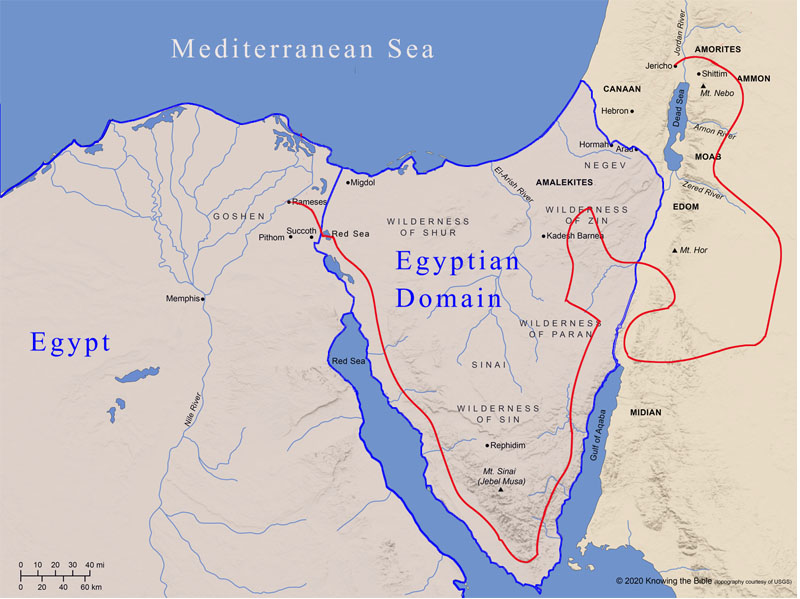
Israelite Journeys Rameses
|
When you complain to people, 80 percent of the people you tell don't care anyway, and 20 percent of the people you tell are glad you finally got what you deserve." Mark Twain The Israelites' journey from Egypt to the Promised Land was marked by a chronic habit of murmuring, with at least 15 distinct complaints recorded in Exodus and Numbers. These complaints ranged from fears over slavery and the Red Sea to cravings for food, often resulting in divine punishment and, subsequently, miraculous provision. They grumbled to Moses & Aaron and ultimately to the Lord. Despite their lack of trust and repeated rebellions, God remained faithful, providing manna, quail, and water, and guiding them with a pillar of cloud and fire. Numbers 16:1 Now Korah son of Izhar, the son of Kohath son of Levi, along with some Reubenites—Dathan and Abiram, sons of Eliab, and On son of Peleth—conducted a rebellion against Moses, along with 250 men of Israel renowned as leaders of the congregation and representatives in the assembly. They came together against Moses and Aaron and told them, "You have taken too much upon yourselves! For everyone in the entire congregation is holy, and the LORD is in their midst. Why then do you exalt yourselves above the assembly of the LORD?" Korah was a Levite from the Kohathite clan and a first cousin to Moses and Aaron. As a Kohathite, he was entrusted with the sacred duty of transporting the most holy objects of the Tabernacle, including the Ark of the Covenant. In the arrangement of the tribes, the Reubenites were placed near the Levitical family of Kohath. Dathan and Abiram were descendants of Reuben, Jacob's firstborn. They likely believed they had a natural right to lead, feeling that leadership had unjustly passed to other tribes (Levi and Judah). The close physical location probably allowed the two groups to share grievances and coordinate their efforts in challenging the appointed leadership. According to the Talmud in Sanhedrin 109b, On son of Peleth was initially involved in the rebellion against Moses and Aaron, but his wife questioned his involvement, gave him wine to intoxicate him and prevented the rebels from calling him to join in their revolt, in effect saving his life. The description of the 250 men were from other tribes who joined in the rebellion emphasizes that these were exceptionally learned and wise individuals—"distinctive people"—who held specialized knowledge of the calendar, rather than simply an unruly mob. The Talmud interprets them as those with a reputation throughout the world. Numbers 16:4 When Moses heard this, he fell facedown. Then he said to Korah and all his followers, "Tomorrow morning the LORD will reveal who belongs to Him and who is holy, and He will bring that person near to Himself. The one He chooses He will bring near to Himself. You, Korah, and all your followers are to do as follows: Take censers, and tomorrow you are to place fire and incense in them in the presence of the LORD. Then the man the LORD chooses will be the one who is holy. It is you sons of Levi who have taken too much upon yourselves!" Moses, as the leader of the Israelites, was often the recipient of complaints and challenges. When confronted by Korah, Dathan, and Abiram, Moses "fell facedown," a posture of humility, submission, and prayer. He appealed to God for wisdom and judgment in dealing with the rebellion. Apparently, the instructions he gave to Korah and his followers came from God. Korah and his followers are challenged to test their claim by performing the highest function of the office—that of offering incense. Numbers 16:8 Moses also said to Korah, "Now listen, you sons of Levi! Is it not enough for you that the God of Israel has separated you from the congregation of Israel and brought you near to Himself to perform the work at the LORD's tabernacle, and to stand before the congregation to minister to them? He has brought you near, you and all your fellow Levites, but you are seeking the priesthood as well. Therefore, it is you and all your followers who have conspired against the LORD! As for Aaron, who is he that you should grumble against him?" Korah was not content with having an important job in the care of the tabernacle. Moses pointed out that by rebelling, Korah and his followers are really opposing the LORD, not Moses and Aaron. Numbers 16:12 Then Moses summoned Dathan and Abiram, the sons of Eliab, but they said, "We will not come! Is it not enough that you have brought us up out of a land flowing with milk and honey to kill us in the wilderness? Must you also appoint yourself as ruler over us? Moreover, you have not brought us into a land flowing with milk and honey or given us an inheritance of fields and vineyards. Will you gouge out the eyes of these men? No, we will not come!" When Moses couldn't get through to Korah, he summoned the Reubenites in order to appeal to them but they also refused to listen. Their ironic, selective description of Egypt as a "land of milk and honey," rather than the place of slavery, shows their unwillingness to reach a peaceful resolution. Numbers 16:15 Then Moses became very angry and said to the LORD, "Do not regard their offering. I have not taken one donkey from them or mistreated a single one of them." Moses defended himself by highlighting his honesty and fairness, demonstrating that the rebellion is unfounded. By asking God to disregard their offerings, Moses is essentially asking God to reject their attempt to legitimize their rebellion. Numbers 16:16 And Moses said to Korah, "You and all your followers are to appear before the LORD tomorrow—you and they and Aaron. Each man is to take his censer, place incense in it, and present it before the LORD—250 censers. You and Aaron are to present your censers as well." Offering incense was a priestly duty, symbolizing the prayers of the people ascending to God. Moses did his best to dissuade the rebels to avoid catastrophic outcomes but to no avail. The confrontation is scheduled "before the LORD," for the next day, placing the dispute under divine authority, not personal opinion. Numbers 16:18 So each man took his censer, put fire and incense in it, and stood with Moses and Aaron at the entrance to the Tent of Meeting. When Korah had gathered his whole assembly against them at the entrance to the Tent of Meeting, the glory of the LORD appeared to the whole congregation. The 250 rebels led by Korah took their censers, placed unauthorized ("strange") fire and incense in them, and stood at the entrance of the tent of meeting. This act, which directly disobeyed divine instructions to use fire from the altar, mirrored the disobedience of Nadab and Abihu. Nothing is more terrible to those who are conscious of guilt, than the appearance of the Divine glory. Numbers 16:20 And the LORD said to Moses and Aaron, "Separate yourselves from this congregation so that I may consume them in an instant." The congregation refers to the Israelites, who were in rebellion against Moses and Aaron. God's consuming fire is a symbol of His holiness and justice underscoring that divine wrath is neither symbolic nor exaggerated. Numbers 16:22 But Moses and Aaron fell facedown and said, "O God, the God of the spirits of all flesh, when one man sins, will You be angry with the whole congregation?" In spite of his anger, Moses begged that God would not destroy the whole congregation. Even though more than 250 leaders opposed Moses and Aaron, they rightly understood that Korah was the center of all this. So Moses and Aaron humbled themselves before God with great love for the rest of the people. Numbers 16:23 Then the LORD said to Moses, "Tell the congregation to move away from the dwellings of Korah, Dathan, and Abiram." Dathan and Abiram, possibly at the very first appearance of the divine glory, drew back into their tents. Because of Moses' prayer, God gave a warning to tell the congregation to move for their own safety. Numbers 16:25 So Moses got up and went to Dathan and Abiram, and the elders of Israel followed him. And he warned the congregation, "Move away now from the tents of these wicked men. Do not touch anything that belongs to them, or you will be swept away because of all their sins." Numbers 16:27 So they moved away from the dwellings of Korah, Dathan, and Abiram. Meanwhile, Dathan and Abiram had come out and stood at the entrances to their tents with their wives and children and infants. Korah, Dathan and Abiram, drew back into their tents, probably at the first appearance of the divine glory. Moses and the seventy elders followed them. Rebellion against God's appointed leader was not just a personal choice; it involved their whole household. Their families stood by them confidently, sure they were in the right and that Moses was nothing more than a tyrant. Numbers 16:28 Then Moses said, "This is how you will know that the LORD has sent me to do all these things, for it was not my own doing: If these men die a natural death, or if they suffer the fate of all men, then the LORD has not sent me. But if the LORD brings about something unprecedented, and the earth opens its mouth and swallows them and all that belongs to them so that they go down alive into Sheol, then you will know that these men have treated the LORD with contempt." In ancient Near Eastern culture, the entrance of a tent or house was a place of significance, often used for judgment or important announcements. Their presence at the entrance indicates their foolish confidence, pride, and impudence and obstinacy. Numbers 16:31 As soon as Moses had finished saying all this, the ground beneath them split open, and the earth opened its mouth and swallowed them and their households—all Korah's men and all their possessions. They went down alive into Sheol with all they owned. The earth closed over them, and they vanished from the assembly. The earth itself responds to God's command, demonstrating His sovereignty over creation, reminiscent of other instances where God uses natural elements to execute judgment, such as the plagues in Egypt. Sheol refers to the "grave," "pit," or abode of the dead, representing the underworld where all departed souls go.
While Korah and all who stood with him fell into the pit, Korah's son, Nemuel was not with his father. In fact, some of his descendants continued to serve in the sanctuary. The prophet Samuel was descended from the tribe of Korah and while others served as temple singers, musicians, and gatekeepers under King David. Numbers 16:34 At their cries, all the people of Israel who were around them fled, saying, "The earth may swallow us too!" And fire came forth from the LORD and consumed the 250 men who were offering the incense. There were two distinct punishments, the pit and the fire, for the two divisions of these rebels. When his followers ran away from the sink hole, they were condemned. God destroyed the 250 leaders who were carrying the censors with unauthorized fire and incense, just as He had dealt with Nadab and Abihu (Leviticus 10:1-7). Numbers 16:36 Then the LORD said to Moses, "Tell Eleazar son of Aaron the priest to remove the censers from the flames and to scatter the coals far away, because the censers are holy. As for the censers of those who sinned at the cost of their own lives, hammer them into sheets to overlay the altar, for these were presented before the LORD, and so have become holy. They will serve as a sign to the Israelites." Scattering the coals symbolized the dispersal of the rebellion and the cleansing of the camp from the impurity associated with the insurrection. Objects dedicated to God retain their sanctity, regardless of human misuse. The altar was the brazen alter in the court where the sacrifices were burned. Numbers 16:39 So Eleazar the priest took the bronze censers brought by those who had been burned up, and he had them hammered out to overlay the altar, just as the LORD commanded him through Moses. This was to be a reminder to the Israelites that no outsider who is not a descendant of Aaron should approach to offer incense before the LORD, lest he become like Korah and his followers. As the son of Aaron, Eleazar was tasked with this holy duty, signifying his role in maintaining the sanctity of the Tabernacle and his succession to high priestly duties. Numbers 16:41 The next day the whole congregation of Israel grumbled against Moses and Aaron, saying, "You have killed the LORD's people!" But when the congregation gathered against them, Moses and Aaron turned toward the Tent of Meeting, and suddenly the cloud covered it and the glory of the LORD appeared. Rather than accepting the fact that it was God that killed Korah and his followers, the congregation blamed Moses and Aaron, who faced constant criticism, yet they remained faithful to God's calling. Once again the Glory of the Lord appears before the congregation. Numbers 16:43 Then Moses and Aaron went to the front of the Tent of Meeting, and the LORD said to Moses, "Get away from this congregation so that I may consume them in an instant." And Moses and Aaron fell facedown. Going to the front of the tabernacle signifies Moses and Aaron were ready to confront the rebellion and seek God's guidance. God is ready, once again, to destroy the children of Israel. Instead of separating themselves from the people, Moses and Aaron fall down and pray for intercession for the people on their behalf. Numbers 16:46 Moses said to Aaron, "Take your censer, place fire from the altar in it, and add incense. Go quickly to the congregation and make atonement for them, because wrath has come out from the LORD; the plague has begun." It appears that in spite of Moses and Aaron prayers, the plaque had already begun. Aaron placed holy fire from the altar and incense into his censer, for intercessory prayer and offering to God. Numbers 16:47 So Aaron took the censer as Moses had ordered and ran into the midst of the assembly. And seeing that the plague had begun among the people, he offered the incense and made atonement for the people. He stood between the living and the dead, and the plague was halted. But those who died from the plague numbered 14,700, in addition to those who had died on account of Korah. This emphasized once more that only the priests could take fire from the altar and offer it with incense before the Lord. A total of 14,950 people died that day due to their rebellion. These events were designed to purge the generation that refused to enter the promised land, ensuring they wandered for 40 years. Numbers 16:50 Then Aaron returned to Moses at the entrance to the Tent of Meeting, since the plague had been halted. The plague ceased because God honored the atonement and prayer made by his ordained high priest, showing mercy after judgment. |