Leviticus - Sacrificial Offerings
Timeline: 1451 BC
(Leviticus 7:22-27, Leviticus 7:37-38; Leviticus 17:10-16; Leviticus 22:31-33)
|
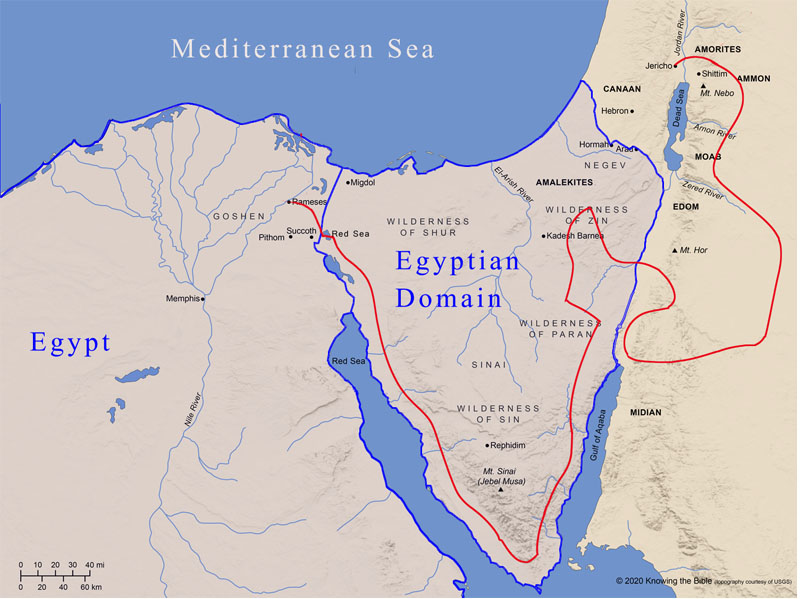
Israelite Journeys Rameses
|
Leviticus 1:1-2 Now the Lord called to Moses, and spoke to him from the tabernacle of meeting, saying, "Speak to the children of Israel, and say to them: 'When any one of you brings an offering to the Lord, you shall bring your offering of the livestock — of the herd and of the flock. "The Lord called to Moses" is used only three times in the Torah. Each time, God is giving new information to Moses. The first time is when God called to Moses from the burning bush, the second time was from Mt. Sinai when Moses received the commandments and the third is here where He gave him the instruction for the offerings. Sacrifices were performed to atone for sin, give thanks and maintain a relationship with God. Each sacrifice involved specific elements, such as animals, fruit, or grain. Some of these were voluntary, some not. Most of them were blood sacrifices. One man's sacrifice would "represent" an entire family, clan, or tribe. In addition to the sacrifices made for sin, there were offerings for ceremonial cleansing and voluntary sacrifices made in thanksgiving to God.
In addition to the offerings listed here is the drink offering described in Numbers 15. Each sacrifice served a specific purpose and function. An important distinction is that the burnt, grain, and peace offerings were voluntary. Meanwhile the sin and trespass sacrifices were mandatory. Both unintentional and intentional sin required an atonement through sacrifice. Another distinction is the burnt, grain and drink offering speak of total dedication to the Lord. A second classification is the fellowship with God called the peace (fellowship) offering which deals with communication with the Lord. The cleansing from God is the third classification including the sin and guild (trespass) offerings.
An Israelite was not allowed to eat the large fatty portions of an animal which was eligible to be burned on the altar, such as sheep, goats, oxen, or cattle. However, God didn't restrict all fat. Other animals, which were clean but not allowed as sacrifices, such as the stag, the antelope, and other kinds of game did not have these restrictions. If an animal died naturally or was killed by a beast, they weren't allowed to eat it but they could use the fat for other uses and the meat could be thrown to the dogs.
Since ancient times, people might eat or drink blood either as food, or often as a ritual or spiritual practice. Often, the idea was that the one who consumed the blood received the life strength of the being that supplied the blood. Pagan nations during that time were very fierce, savage, and barbarous. Some of whom drank the blood of their enemies, making cups of their skulls. This law was not only for the Israelites themselves, but the strangers who were circumcised and lived among them, who were in danger of returning to their old ways of worship.
The prohibition against eating the blood became an important aspect of 'Kosher' food. For food to be kosher the animal's carotid artery was cut, and the animal had to bleed for a designated amount of time. When enough blood leaves a body, life leaves a body. If an animal was killed for food and was not sacrificed was to be drained of its blood and that life blood was buried to give it a decent burial.
According to the Mosaic Law, something was considered "unclean" if it was unfit to use in worship to God.
The life of the flesh is in the blood, and it therefore belongs to God. Since blood was the means by which atonement was made, to eat blood was to profane it, to make it a common thing. |
| Matt, Cassie | |