Leviticus - Nadab and Abihu
Timeline: 1451 BC
Leviticus 10:1-7; 10:8-20
|
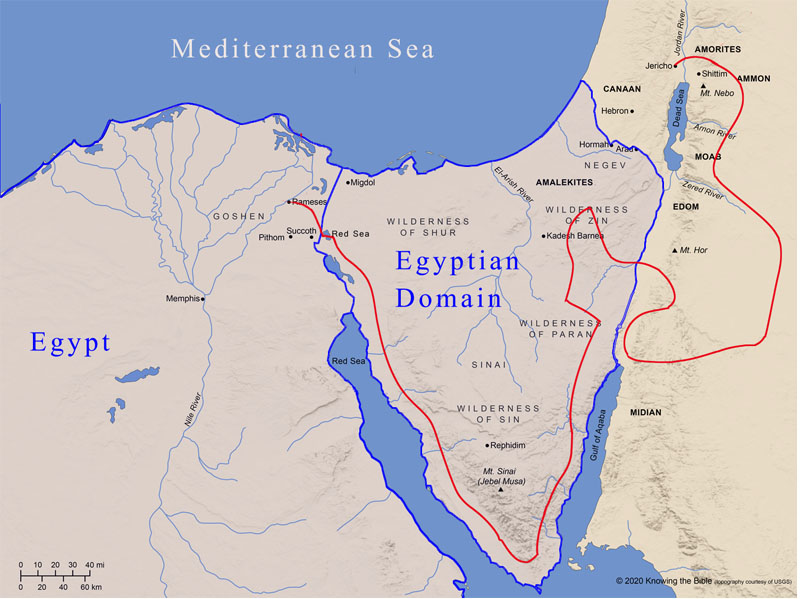
Israelite Journeys Rameses
|
In the previous chapter we read that God sent fire and consumed the burnt offering. He instructed the priests to never let the fire go out. Coals from the brazen altar were placed in a fire pan and taken inside the tabernacle to the altar of incense. Everything in God's worship and service was to be done in the proper place and order, including the procedures for the altar of incense. God gave very specific instructions for preparing and using the sacred incense including a very clear command as to any imitation so they could do so in safety, without dying. Exodus 30:9 You shall not offer unauthorized incense on it, or a burnt offering, or a grain offering, and you shall not pour a drink offering on it. Nadab and Abihu were the first two sons of Aaron. While Moses was on Mt. Sinai they shared a meal in God's presence without being harmed. Aaron and his sons were ordained in a ceremony that lasted seven days. On the eighth day, they began their duties... Leviticus 10:1-3 Now Aaron's sons Nadab and Abihu took their censers, put fire in them and added incense, and offered unauthorized fire before the LORD, contrary to His command. So fire came out from the presence of the LORD and consumed them, and they died in the presence of the LORD. Commentators have many explanations for their demise:
There are probably many more suppositions since the scripture is not very clear. All we have in the text is a statement that they did what God had not commanded them to do. Leviticus 10:4-5 Then Moses said to Aaron, "This is what the LORD meant when He said: 'To those who come near MeBut Aaron remained silent. Nadab and Abhihu were found guilty of disobedience and disrespecting God. Moses highlighted the importance of reverence to God. Aaron was well aware of that so he remained silent in acceptance of God's judgment. Leviticus 10:4 Moses summoned Mishael and Elzaphan, sons of Aaron's uncle Uzziel, and said to them, "Come here; carry the bodies of your cousins outside the camp, away from the front of the sanctuary." So they came forward and carried them, still in their tunics, outside the camp, as Moses had directed. Mishael and Elzaphan were first cousins to Aaron. They were not considered part of the tribe of Levi so normally they were not allowed to go into the holy place but on this occasion, an exception was made. They were ordered to take Nadab and Abihu's bodies into a field away from the place devoted to sacred worship. Nadab and Abihu were dressed in their tunics when they were carried off and were probably buried still wearing them. Leviticus 10:6-7 Then Moses said to Aaron and his sons Eleazar and Ithamar, "Do not let your hair become disheveled and do not tear your garments, or else you will die, and the LORD will be angry with the whole congregation. But your brothers, the whole house of Israel, may mourn on account of the fire that the LORD has ignited. You shall not go outside the entrance to the Tent of Meeting, or you will die, for the LORD's anointing oil is on you." So they did as Moses instructed. In ancient times, a common pattern of mourning was the tearing apart of one's clothes, putting on a sackcloth, putting dust and ashes on their heads, and fasting. Aaron and his remaining sons were not allowed to show the accustomed signs of mourning or to leave the court of the tabernacle in order to attend the funeral. Although rules for the priests that are outlined in Leviticus 21:1-24 allow priests to be ceremonially unclean for close relatives who die under normal circumstances, they were not allowed to leave or desecrate the sanctuary of his God, for the consecration of the anointing oil of his God was on him (Leviticus 21:11-12). Leviticus 10:8-11 Then the LORD said to Aaron, "You and your sons are not to drink wine or strong drink when you enter the Tent of Meeting, or else you will die; this is a permanent statute for the generations to come. You must distinguish between the holy and the common, between the clean and the unclean, so that you may teach the Israelites all the statutes that the LORD has given them through Moses." People often turn to alcohol after a loss as a way to cope with grief, seeking temporary relief from the intense emotional pain. Indeed, Aaron and his sons were experiencing such pain. Perhaps this passage is a warning from God to deter them from making a deadly mistake. This could be the reason why these verses appear in this particular place. Community leaders often are forced to sacrifice their own emotional needs for the sake of maintaining stability, structure and continuity. Mourning would have to be deferred for the sake of the religious needs of the community. Moses told him to continue observing the public sacrificial rites that were to be performed that day. Leviticus 10:12-13 And Moses said to Aaron and his remaining sons, Eleazar and Ithamar, "Take the grain offering that remains from the food offerings to the LORD and eat it without leaven beside the altar, because it is most holy. You shall eat it in a holy place, because it is your share and your sons' share of the food offerings to the LORD; for this is what I have been commanded. The grain offering is baked in an oven or fried in a pan. Everyone who touches the offering must be holy. Part of it is burnt on the altar as a sweet offering to the Lord. The rest of it given to Aaron and his sons to eat within the Tabernacle/within sacred space designated as "most holy." This commandment was given in Leviticus 2:8-12 and Leviticus 6:16 & 18. Leviticus 10:14-15 And you and your sons and daughters may eat the breast of the wave offering and the thigh of the contribution in a ceremonially clean place, because these portions have been assigned to you and your children from the peace offerings of the sons of Israel. They are to bring the thigh of the contribution and the breast of the wave offering, together with the fat portions of the food offerings, to wave as a wave offering before the LORD. It will belong permanently to you and your children, as the LORD has commanded." When a sheep or goat is sacrificed as peace offering, the fat is burnt on the altar as an offering made by fire to the Lord. The breast and the thigh is set aside for Aaron and his sons. They are to wave the breast implying consecration to the Lord. The thigh was lifted up (heaved) as a symbolic gesture of dedication and dependence on God. Then they were to eat their portion at the door of the tabernacle as a symbol of communion or fellowship with God. This commandment is explained in Exodus 29:27 & Leviticus 7:28-36. Leviticus 10:16-18 Later, Moses searched carefully for the goat of the sin offering, and behold, it had been burned up. He was angry with Eleazar and Ithamar, Aaron's remaining sons, and asked, "Why didn't you eat the sin offering in the holy place? For it is most holy; it was given to you to take away the guilt of the congregation by making atonement for them before the LORD. Since its blood was not brought inside the holy place, you should have eaten it in the sanctuary area, as I commanded." A sin offering was required for forgiveness of sins committed unintentionally by the people. In this ceremony, a goat was sacrificed and the fat was to be burnt on the altar. If the sacrifice was for the priest alone, the blood of a bull would have been brought into the holy place and sprinkled on the veil to cover his sins. Since this is not the case, this sin offering is for the people. Aaron and his sons were supposed to eat the breast and thigh at the door of the tabernacle to make atonement for the congregation. They burned the entire offering instead of eating it in the sanctuary, as instructed by God. Moses was probably upset because he feared Aaron and his sons would suffer the same fate as that of Nadab and Abihu. Leviticus 10:19 But Aaron replied to Moses, "Behold, this very day they presented their sin offering and their burnt offering before the LORD. Since these things have happened to me, if I had eaten the sin offering today, would it have been acceptable in the sight of the LORD?" The eating of the sin offering was to be celebrated with joy. This would have created a conflict of interest. How could they be joyful after loosing their family members and then not being allowed to mourn properly for them. Aaron did not want to sin against God by pretending that they were happy after the tragedy that befell his sons. Leviticus 10:20 And when Moses heard this explanation, he was satisfied. Aaron's answer was sincerely aimed at pleasing God. Moses sympathized with his deeply afflicted brother and, having pointed out the error, said no more. God also accepted his answer and did not inflict punishment on Aaron or his sons. |
| Cassie, Matt | |