Resources
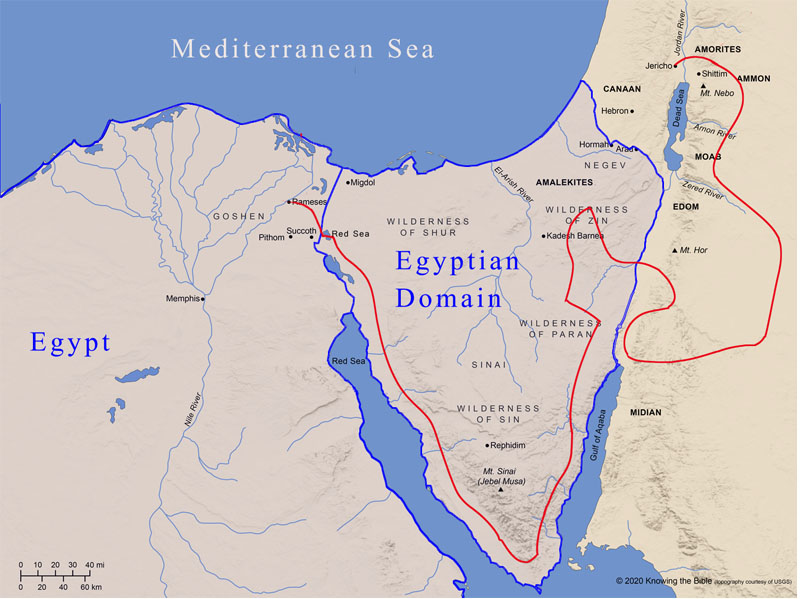
Israelite Journeys
Rameses
Succoth
Etham
Pi-hahiroth
By the Red Sea
Wilderness of Etham
Marah
Elim
By the Red Sea
Wilderness of Sin
Dophkah
Alush
Rephidim
Wilderness of Sinai
Kibroth-hattaavah
Hazeroth
Rithmah
Rimmon-perez
Libnah
Rissah
Kehelathah
Mount Shepher
Haradah
Makheloth
Tahath
Terah
Mithkah
Hashmonah
Moseroth
Bene-jaakan
Hor-haggidgad
Jotbathah
Abronah
Ezion-geber
Kadesh
Mount Hor
Zalmonah
Punon
Oboth
Iye-abarim
Dibon-gad
Almon-diblathaim
Abarim
Moab
Beth-jeshimoth
Abel-shittim
(Exodus 12:1-2, 23:15; Leviticus 23:1–44; Deuteronomy 16:16-17)
God gave Moses seven appointed times or feasts to observe in various ways where both the priests and the people will make a united and public witness of their faith in order to both remember and to teach what their holy God has done for them and has done with them. There were seven of these, they were called convocations. The word convocation means assemblies. So there were seven of these convocations or feasts, or appointed times, and each one included three elements.
Leviticus 23:1-2 Then the LORD said to Moses, "Speak to the Israelites and say to them, 'These are My appointed feasts, the feasts of the LORD that you are to proclaim as sacred assemblies.
The Israelites left Egypt on the 14th day of Nissan, the first month of the Jewish year. This was the day after the angel of death passed over the first born of the Israelites. Then the tabernacle was set up in the second year on Nissan 1st. Shortly after that, God required the people of Israel to set aside and to observe these special days faithfully.
The Hebrew word for "feasts" (moadim) literally means "appointed times". God designated seven annual feasts to remind the Israelites each year of God's ongoing protection and provision. The festivals were a time for assembly and worship.
Deuteronomy 16:16: "Three times a year all your men must appear before the Lord your God at the place he will choose: at the Festival of Unleavened Bread, the Festival of Weeks and the Festival of Tabernacles."
Once the Israelites arrived in the Promised Land, God gave the order for all able-bodied Jewish males to gather in the place which He chose, namely, Jerusalem. Although the order was specifically for the men, the females were welcome and even encouraged to attend. This practice was followed at the time of Christ, which is why the gospels often record Jesus' visits to Jerusalem.
Leviticus 23:3 For six days work may be done, but the seventh day is a Sabbath of complete rest, a day of sacred assembly. You must not do any work; wherever you live, it is a Sabbath to the LORD.
The Sabbath (Shabbat) is the seventh day of the week from Friday evening to Saturday evening. The Jewish term Shabbat means "rest" or "cessation". Its meaning is rooted in God's rest following the six days of creation. It involves refraining from unnecessary labor and worship. The Sabbath was observed every seven days, from a few minutes before sundown on Friday night, until after sundown on Saturday evening. The Jews were commanded to not do any work on those days. It is the only ritual observance instituted in the Ten Commandments. God designated it a holy day to be remembered for all time.
Numbers 15:32-36 While the Israelites were in the wilderness, a man was found gathering wood on the Sabbath day. Those who found him gathering wood brought him to Moses and Aaron and the whole assembly, and they kept him in custody, because it was not clear what should be done to him. Then the Lord said to Moses, "The man must die. The whole assembly must stone him outside the camp." So the assembly took him outside the camp and stoned him to death, as the Lord commanded Moses.
The commandment was clear, that no one should work on the Sabbath. An exception is made for the priesthood who carried out specific sacrifices and rituals every Sabbath, including teaching, preaching and offering sacrifices. Since their duties were commanded by God, they were held blameless for doing what was strictly considered work.
Some of the Jewish feast days are also designated as Sabbaths. These include Passover, the Feast of Unleavened Bread, the Feast of Weeks (Pentecost), the Feast of Trumpets, the Day of Atonement, and the Feast of Tabernacles. These feasts were categorized as sabbath days or sabbaths because the Israelites were commanded by God to rest during these periods. In addition to all these, every seventh year was to be the Sabbath of the land, and every fiftieth year was to be the Year of Jubilee.
Depending on the calendar year, an annual Sabbath occurs on a regular weekly Sabbath. It is then referred to an exceptionally high or doubly sacred day called the "Sabbath of the Sabbaths" or "Most Holy Sabbath". When this happens, the annual Sabbath takes precedence and the special observances are prioritized over the typical weekly Sabbath observance. The rules of not working were kept especially strict on those days.
In addition to the Sabbath and Feast offerings, the Israelites were to present a burnt offering to the Lord at the beginning of every month (Numbers 28:11-15, 27-30).
Leviticus 23:4 These are the LORD's appointed feasts, the sacred assemblies you are to proclaim at their appointed times.
In Exodus 12, God established the month of Nisan as the beginning of the new year for Israel, signifying a fresh start and a new beginning for the nation. Nisan is a Babylonian name, but in Hebrew it is called Abib (pronounced "Aviv"). On the Gregorian calendar, it refers to thirty days in March-April. The Jewish calendar is based on the phases of the moon. Each month begins with a new moon.
The Jewish nation was commanded by God to celebrate seven feasts over a seven month period of time. In the Jewish calendar, every festival comes at exactly the right time each year. Every holiday (like every day in the Jewish calendar) begins at sunset. Holidays end at nightfall when three stars appear in the sky. The most important day in the Jewish calendar is Yom Kippur, also known as the Day of Atonement. It is very important to understand the Hebrew calendar since if the priest entered the Holy of Holies on the wrong day, he had to die.
Passover (Pesach)
(Exodus 12:18, 24–28, 43-51; Leviticus 23:5; Numbers 9:1-14, 28:16–25; Deuteronomy 16:1-7)
Leviticus 23:5 The Passover to the LORD begins at twilight on the fourteenth day of the first month.
Passover begins halfway through the month at sunset and continued through to midnight when the moon is full. It first began with the Israelites' redemption and escape from 400 years of Egyptian slavery. Judging the gods of Egypt, God sent the tenth and final plague throughout Egypt which killed all the firstborn sons. The purpose of Passover is to commemorate the time when the angel of death "passed over" the children of Israel who applied the blood of the lamb to their doors, sparing them from the plague on Egypt.
God Mandated the following rules for the Passover:
The whole congregation of Israel must celebrate it.
Any slave who has been purchased may eat of it, after you have circumcised him.
A temporary resident or hired hand shall not eat the Passover.
If a foreigner who resides with you wants to celebrate the LORD's Passover, all the males must be circumcised. Then he is considered part of the community.
No uncircumcised man may eat of it.
The meal must be eaten inside one house, no meat is allowed outside the house.
You may not break any of the bones.
The same law shall apply to both the native and the foreigner who resides among you.
Leaven was a symbol of evil influence. Leaven (or yeast) is often associated with sin, pride, and the corrupting influence of false teachings or hypocrisy.
Anyone who eats anything with yeast in it must be separated from the community of Israel.
In the first month of the second year after the people came out of Egypt, God told the Israelites to celebrate the Passover Feast. The laws specified that unclean people were not allowed to participate in the Passover meal. However, God made a prevision for the unclean and for those who were away on a distant journey. They would be allowed to celebrate on the same day in the second month following the same rules as the Passover.
Numbers 28:16-17 The fourteenth day of the first month is the LORD's Passover. On the fifteenth day of this month, there shall be a feast; for seven days unleavened bread is to be eaten.
The Feast of Unleavened Bread (Hag Hamatzot)
(Exodus 12:14-20; Leviticus 23:6–8; Numbers 28:17–25; Deuteronomy 16:8)
Leviticus 23:6-8 On the fifteenth day of the same month begins the Feast of Unleavened Bread to the LORD. For seven days you must eat unleavened bread. On the first day you are to hold a sacred assembly; you are not to do any regular work. For seven days you are to present a food offering to the LORD. On the seventh day there shall be a sacred assembly; you must not do any regular work.'"
Numbers 28:18-22 On the first day there is to be a sacred assembly; you must not do any regular work. Present to the LORD a food offering, a burnt offering of two young bulls, one ram, and seven male lambs a year old, all unblemished. The grain offering shall consist of fine flour mixed with oil; offer three-tenths of an ephah with each bull, two-tenths of an ephah with the ram, and a tenth of an ephah with each of the seven lambs. Include one male goat as a sin offering to make atonement for you.
Passover and the Feast of Unleavened bread are often viewed as one feast because they occur one immediately after the other, however they are two distinct feasts. Passover begins on the 14th day and lasts for one-night whereas the Feast of Unleavened Bread begins on the 15th and continues for 7 days.
The Feast of Unleavened Bread was established while the Israelites were still in Egypt. Since the children of Israel left Egypt hastily, they did not have time for the bread to rise, so it was made without leaven. Jewish tradition holds that the Israelites crossed the Red Sea seven days after the Passover.
Numbers 28:23 You are to present these in addition to the regular morning burnt offering. Offer the same food each day for seven days as a food offering, a pleasing aroma to the LORD. It is to be offered with its drink offering and the regular burnt offering. On the seventh day you shall hold a sacred assembly; you must not do any regular work.
On the first and seventh day, the Israelites came together for a special service. They were not allowed do any regular work on those days. The only work they were allowed to do is prepare food for everyone to eat as a reminder of God's deliverance from death and slavery.
God gave Moses the dates and observances of the feasts while the children of Israel were on Mount Sinai, but the food offering rules changed after they entered the Promised Land. While in the wilderness, their bread was primarily manna provided by God. Deuteronomy 29:6 states: "You ate no bread and drank no wine or strong drink, so that you might know that I am the LORD your God." Food offerings were to be presented with grain and wine, indicating that the majority of these rules and regulations pertained to the Israelites only after they entered Canaan.
The Feast of First Fruits
(Exodus 12:19, 23:16; Leviticus 23:9-14)
Leviticus 23:9-11 And the LORD said to Moses, "Speak to the Israelites and say, 'When you enter the land that I am giving you and you reap its harvest, you are to bring to the priest a sheaf of the firstfruits of your harvest. And he shall wave the sheaf before the LORD so that it may be accepted on your behalf; the priest is to wave it on the day after the Sabbath.
The appointed times were closely related to Israel's spring and fall harvests and agricultural seasons. The Feast of First Fruits celebrated the first of the harvest. A sheaf is a bundle of grain stalks laid parallel together and tied into a bundle. The priest would lift it into the air, and wave it in every direction to acknowledge God's provision and sovereignty and ask Him to bless the whole harvest.
Unlike every other feast in God's calendar, this feast must always be celebrated on the day following the Sabbath, presumably on a Sunday after the first day of the Feast of Unleavened bread. There is some controversy over the term "Sabbath" in this passage which began in the second temple times and still continues today.
The day after the wave offering, the Israelites were to count fifty days and then celebrate the Feast of Weeks, which later became known as Pentecost. The Sadducees understood the Sabbath in its literal sense denoting the first Saturday after Passover (Nisan 14). They began counting seven Sabbaths beginning with the first one after the first day of the Feast of Unleavened Bread (Nisan 15). Following this interpretation, the Feast of Weeks (Pentecost) would always land on Sunday, the first day of the week.
The Pharisees, had a different interpretation. They believed the first day of the Feast of Unleavened Bread on Nisan 15, is considered a High Sabbath because no work was to be performed. Therefore, the priest was to perform the wave offering on the 16th. This day might occur any day of the week after Passover. The problem with this opinion is that there are not seven High Sabbaths in the next fifty days so therefore it had to be seven regular Sabbaths.
Jesus ate his last supper on Thursday (Nisan 13) after sunset. Later that night, he was tried and convicted. He was crucified the next day (Passover), on Friday (Nisan 14) and was taken down and buried before Saturday, the Sabbath which was also the first day of the Festival of Firstfruits (Nisan 14). On Sunday, (Nisan 15) the priest waved the offering before God and on that same day Jesus rose from the grave.
Leviticus 23:12-13 On the day you wave the sheaf, you shall offer a year-old lamb without blemish as a burnt offering to the LORD, along with its grain offering of two-tenths of an ephah of fine flour mixed with oil—a food offering to the LORD, a pleasing aroma—and its drink offering of a quarter hin of wine.
The wave offering always accompanied a burnt offering, a grain offering and peace offering. The burnt offering symbolized complete dedication, the grain offering represented the firstfruits of the harvest, and the peace offering was a sign of fellowship and thanksgiving for God's blessings. Sin offering is not required for the festival of Firstfruits. The offering of First Fruit is distinct from the tithes. The first fruits symbolize giving the best in the beginning while a tithe is a small percent or portion of the total.
Leviticus 23:14 You must not eat any bread or roasted or new grain until the very day you have brought this offering to your God. This is to be a permanent statute for the generations to come, wherever you live.
The spring festival was held when the first grain ripened in the spring. The Israelites would cut a single sheaf of barley as the firstfruits offering before the general harvest began. This offering was a symbolic act of gratitude to God for the beginning of the harvest and a sanctification of the entire harvest season. They were prohibited from eating any new grain, including barley, until the offering was presented to God.The unleavened bread for the first and the second days of Passover was prepared from the previous year's harvest. The bread for the following days could be made from the new harvest only after the offerings were made to the Lord at his altar. The command for this lasting ordinance is not a temporary rule. It is intended to be observed eternally by the people of Israel, regardless of their location.
The Feast of Weeks
(Leviticus 23:15–22; Numbers 28:26-31; Deuteronomy 16:9-12)
Leviticus 23:15-16 From the day after the Sabbath, the day you brought the sheaf of the wave offering, you are to count off seven full weeks. You shall count off fifty days until the day after the seventh Sabbath, and then present an offering of new grain to the LORD.
Numbers 28:26-31 On the day of firstfruits, when you present an offering of new grain to the LORD during the Feast of Weeks,h you are to hold a sacred assembly; you must not do any regular work.
Present a burnt offering of two young bulls, one ram, and seven male lambs a year old as a pleasing aroma to the LORD, together with their grain offerings of fine flour mixed with oil—three-tenths of an ephah with each bull, two-tenths of an ephah with the ram, and a tenth of an ephah with each of the seven lambs.
Include one male goat to make atonement for you. Offer them with their drink offerings in addition to the regular burnt offering and its grain offering. The animals must be unblemished.
The Israelites were to count seven Sabbaths (weeks) and observe the next feast on the following, or fiftieth, day. The Feast of Weeks was the concluding festival of the grain harvest and a thanksgiving celebration when they gave a freewill offering in proportion to how God had blessed them.
The Feast of Weeks was later named "Pentecost" by Greek Jews in 300 BC which is the Greek word for the "feast of fifty". It commemorated the giving of the Law at Mount Sinai. Fifty days after the departure from Egypt, the Israelites found themselves at the base of Mount Sinai (see Exodus 19) where they received the Ten Commandments.
Once they arrived in the Promised Land, this festival marked the end of the wheat harvest in ancient Israel. It was one of the three pilgrimage festivals that required the males to appear in the Temple. They were to present their first fruit offerings to the priests as an act of gratitude and worship, recognizing God's goodness and provision for His people.
Exactly seven weeks after the first day of the Feast of Firstfruits when Jesus arose from the dead, the Holy Spirit descended upon the apostles and they began speaking in other languages. Pentecost marked the beginning of the church as a functioning body when the fullness of the gospel went out from the people of Israel to the Gentiles.
Leviticus 23:17 Bring two loaves of bread from your dwellings as a wave offering, each made from two-tenths of an ephah of fine flour, baked with leaven, as the firstfruits to the LORD.
At Passover, the Israelites offered raw grain, some of which was burned on the altar and they ate unleavened bread. In contrast, this festival's offerings included leavened loaves which were waved before the Lord and then given to the priests after a handful of wheat flour was set aside for the burnt offering. These were the only peace offerings for the entire congregation and were reckoned most holy, whereas other peace-offerings were but holy.
This is the only feast using leavened bread. While leaven can symbolize sin, here it represents human imperfection and the need for God's grace. These loaves represent growth and transformation; the leaven acknowledges God's goodness in their everyday leavened food, highlighting spiritual growth and transformation, symbolized by the expanding wave loaves.
These loaves were made of fine wheat flour, weighing over ten pounds. Each loaf, according to Maimonides, measured seven handbreadths long, four wide, and four fingers high, in other words, approximately 22 inches long, 9.5 inches wide, and 3 inches high. The loaves were described as "brick-shaped". An ephah (dry measure, about a bushel and 40 pounds) means two-tenths of an ephah was about eight pounds of fine flour.
Leviticus 23:18 Along with the bread you are to present seven unblemished male lambs a year old, one young bull, and two rams. They will be a burnt offering to the LORD, together with their grain offerings and drink offerings—a food offering, a pleasing aroma to the LORD.
After the leavened bread was waved before the LORD, a young bull between one and three years old, seven yearling lambs and two rams, all unblemished, were placed on the altar as a burnt offering. They also presented a grain offering consisting of fine flour mixed with oil; three-tenths of an ephah for the bull, two-tenths for each of the rams and one-tenth for each of the lambs. In addition to the burnt offering and its grain offering, drink offerings included half a hin of wine with each bull, a third of a hin with the ram, and a quarter hin with each lamb.
Each sacrifice had a specific meaning: the bull represented strength, lambs symbolized innocence and provision, and rams stood for leadership and guidance. The grain and drink offerings highlighted God's role in providing for every part of life. This made the festival a full celebration of God's faithfulness, from planting to harvest.
All these offerings expressed gratitude and showed that God accepted the sacrifices. They represented thankfulness and dedication to God's provision. They recognized Him as Lord of their land and harvest, acknowledging that everything came from His favor.
The special offerings, appointed for certain days, were not to interfere with the offerings usually requisite on these days, the daily offerings, as well as those for the first day of the month, were to take place in their ordinary course.
Leviticus 23:19-20 You shall also prepare one male goat as a sin offering and two male lambs a year old as a peace offering. The priest is to wave the lambs as a wave offering before the LORD, together with the bread of the firstfruits. The bread and the two lambs shall be holy to the LORD for the priest.
The harvest celebration acknowledged God's provision and blessing upon Israel's lives and land. It also had a spiritual dimension, reminding Israel of their dependence on God and acknowledging their need for forgiveness. While the regular sin offering for the people's sin was a bullock; here, a male goat along with the drink offerings, burnt offering and grain offering, was offered for the whole congregation's sin, acknowledging their guilt and need for atonement. The difference might be because the bullock atoned for a specific sin, while the kid covered all their sins.
Two yearling lambs were waved before the Lord, along with the bread of the firstfruits, as a peace offering given to the priest, symbolizing fellowship and gratitude to God and seeking blessings on the harvest. All the sacrificial animals were be be unblemished.
Leviticus 23:21 On that same day you are to proclaim a sacred assembly, and you must not do any regular work. This is to be a permanent statute wherever you live for the generations to come.
This "proclamation" called for a "sacred assembly," highlighting the importance of gathering for sacrifices and prayers. It was a Sabbath of rest—a cessation from labor and a time to remember God's deliverance from Egypt and the giving of the law at Sinai.
The KJV reads, "And ye shall proclaim on the same day, that it may be an holy convocation unto you." The Hebrew word for holy convocation is "miqra," which means "rehearsal." God's appointed times served as holy rehearsals for a future messianic event, prefiguring the Pentecost outpouring of the Holy Spirit. Following this first-fruits of the Spirit, the apostles spread the Gospel to all nations, marking the birth of the Christian Church, dedicated to teaching, fellowship, and prayer. The ultimate harvest of souls anticipates the final rest found in Christ.
Leviticus 23:22 When you reap the harvest of your land, do not reap all the way to the edges of your field or gather the gleanings of your harvest. Leave them for the poor and the foreign resident. I am the LORD your God.'"
During times of celebration and harvest abundance, every person who had a harvest to reap had a duty to remember the poor, the distressed and the foreigners when gathering in their harvest. They were to leave the corner of the field and the gleanings (the leftover grain that falls to the ground during harvest) to the poor. The needy had legal share in the produce. No proprietor was exemption from the divine commandment.
At the presentation of the first-fruits, the priests reminded the people of the law to teach them to expressed their thankfulness to God, emphasizing obedience as an act of faith. They were to exercise charity and liberality to the poor. It reinforced the principle of caring, generosity and compassion, ensuring the vulnerable less fortunate and have access to food and resources within the community.
The Feast of Trumpets
(Leviticus 23:23-25; Numbers 29:1–6)
Leviticus 23:23-25 The LORD also said to Moses, "Speak to the Israelites and say, 'On the first day of the seventh month you are to have a day of rest, a sacred assembly announced by trumpet blasts. You must not do any regular work, but you are to present a food offering to the LORD.'"
Numbers 29:1-6 "On the first day of the seventh month, you are to hold a sacred assembly, and you must not do any regular work. This will be a day for you to sound the trumpets.
As a pleasing aroma to the LORD, you are to present a burnt offering of one young bull, one ram, and seven male lambs a year old, all unblemished, together with their grain offerings of fine flour mixed with oil—three-tenths of an ephaha with the bull, two-tenths of an ephahb with the ram, and a tenth of an ephahc with each of the seven male lambs.
Include one male goat as a sin offering to make atonement for you. These are in addition to the monthly and daily burnt offerings with their prescribed grain offerings and drink offerings. They are a pleasing aroma, a food offering to the LORD.
Nissan and Tishrei are both months in the Jewish calendar, but they represent different "New Years" depending on what is being counted. Nissan is considered the "head of the months" for religious purposes. God set the Exodus from Egypt as the most significant moment in time marking the birth of the Jewish nation. In Hebrew, "Tishrei means "beginning" or "beginning of the year" even though it's the seventh month when counting from Nissan. Tishrei is used for counting years and dates from the time of creation, which Jews view as the most central event to ever take place.
The number seven holds significant cultural, religious, and mathematical symbolism. The seventh month of Tishrei is considered the Holy of Holies month, the high-point in the cycle of the feasts and includes more commandments and holy days than any other month. The Feast of Trumpets marked the beginning of ten days of consecration and repentance before God.
On the opening day of that month the people were to observe a sacred day of rest and remembrance called the Feast of Trumpets, more widely today as Rosh Hashanah. This day was observed in like manner as the first and seventh days of Unleavened bread, and the day of Pentecost in which no daily work was completed. A shofar - a trumpet made from a ram's horn, was blown to cease from servile work in order to worship and to prepare the people for the approaching solemn feast.
Exodus 19:13-19 tells how God invited the nation of Israel into a covenant. When the trumpet sounded a long blast, God manifested His presence in smoke and fire on the mountain, causing the people to tremble as they stood at the foot of the mountain.
In modern Jewish practice, Rosh Hashanah is a two-day celebration that begins on the first day of the month of Tishrei and is associated with introspection and repentance in the lead-up to the Day of Atonement. Throughout the day, the Israelites today can hear the sound of a trumpet or shofar. They blow the shofar in certain sound patterns that represent different reasons for the celebration. The trumpet blasts serves as a call to repentance and a reminder of God's faithfulness and to "remind" God of His covenant promises, which include restoration upon repentance from sin and prayer for divine help.
The Day of Atonement
(Leviticus 16:1-34; Leviticus 23:26-32; Numbers 29:7–11)
Leviticus 23:26-27 Again the LORD said to Moses, "The tenth day of this seventh month is the Day of Atonement. You shall hold a sacred assembly and humble yourselves, and present a food offering to the LORD.
Numbers 29:7-11 On the tenth day of this seventh month, you are to hold a sacred assembly, and you shall humble yourselves;d you must not do any work.
Present as a pleasing aroma to the LORD a burnt offering of one young bull, one ram, and seven male lambs a year old, all unblemished, 9together with their grain offerings of fine flour mixed with oil—three-tenths of an ephah with the bull, two-tenths of an ephah with the ram, 10and a tenth of an ephah with each of the seven lambs.
Include one male goat for a sin offering, in addition to the sin offering of atonement and the regular burnt offering with its grain offering and drink offerings.
The day Moses came down the mountain (the 10th of Tishrei) was to be known forevermore as the Day of Atonement. God gave specific instructions in Leviticus 16 about how to approach the Most Holy Place to make atonement for the Israelites once a year. The high priest must bathe himself with water and then cloth himself with special holy garments. He is to offer a bull for a sin offering to make atonement for himself and his household. Then he must take two male goats, one is sacrificed for a sin offering, the other is sent into the wilderness as the scapegoat. A ram is also sacrificed as a burnt offering to make atonement for the people. The sacrifices on the Day of Atonement were distinct from and in addition to the regular daily burnt and meal offerings.
Israel was commanded to gather to participate in various rituals and festivals in the tabernacle, and later the Temple, which was designed to symbolize God's presence among His people and to facilitate communion and fellowship between God and humanity.
The Day of Atonement was slightly different from the other Feasts. It was not a celebration feast but a humble recognition of sin. The phrase "humble yourselves" has been interpreted as an act of self-denial, fasting for the entire day and to make it a day of solemn reflection over one's sins and life the previous year.
Leviticus 23:28-30 On this day you are not to do any work, for it is the Day of Atonement, when atonement is made for you before the LORD your God. If anyone does not humble himself on this day, he must be cut off from his people. I will destroy from among his people anyone who does any work on this day.
"Yom Kippur", the Hebrew name for the Day of Atonement, was the high holy day of the year, considered the Sabbath of Sabbaths, since no work is to be done on this day. Anyone, meaning the native or foreigners living within their communities, suffered severe consequences if they disobeyed this command.
While the penalty was death for intentionally working on the Sabbath, the consequence for a person unintentionally working on the Day of Atonement was not physical death. The phrase being "cut off from his people" or "destroyed from among his people", implies a severe form of exclusion or divine punishment. This can be interpreted in various ways, such as spiritual excommunication, but it is distinct from the explicit "put to death" penalty for breaking the Sabbath.
Leviticus 23:31-32 You are not to do any work at all. This is a permanent statute for the generations to come, wherever you live. It will be a Sabbath of complete rest for you, and you shall humble yourselves. From the evening of the ninth day of the month until the following evening you are to keep your Sabbath."
After the first Temple was built, Jews would gather there to experience the sacred sight of the high priest performing his service, obtaining forgiveness for all of Israel. This practice continued for hundreds of years, throughout the time of the first Temple in Jerusalem, which was built by Solomon, and the second Temple, which was built by Ezra. When the second Temple was destroyed in 70 AD, the Yom Kippur service transitioned from Temple-centered rituals to synagogue services. From the time the sun sets on the ninth of Tishrei until the stars comes out in the evening of the next day, Jewish people today abstain from food and drink, do not wash or apply lotions or creams, do not wear leather footwear, and abstain from marital relations. Instead, they spend the day in synagogues, praying for forgiveness.
The Feast of Tabernacles
(Leviticus 23:33-44; Numbers 29:12-40; Deuteronomy 16:13-17)
Leviticus 23:33-36 And the LORD said to Moses, "Speak to the Israelites and say, 'On the fifteenth day of the seventh month the Feast of Tabernacles to the LORD begins, and it continues for seven days. On the first day there shall be a sacred assembly. You must not do any regular work. For seven days you are to present a food offering to the LORD. On the eighth day you are to hold a sacred assembly and present a food offering to the LORD. It is a solemn assembly; you must not do any regular work.
Numbers 29:12-40 On the fifteenth day of the seventh month, you are to hold a sacred assembly; you must not do any regular work, and you shall observe a feast to the LORD for seven days.
As a pleasing aroma to the LORD, you are to present a food offering, a burnt offering of thirteen young bulls, two rams, and fourteen male lambs a year old, all unblemished, along with the grain offering of three-tenths of an ephah of fine flour mixed with oil with each of the thirteen bulls, two-tenths of an ephah with each of the two rams,5and a tenth of an ephah with each of the fourteen lambs. Include one male goat as a sin offering, in addition to the regular burnt offering with its grain offering and drink offering.
On the second day you are to present twelve young bulls, two rams, and fourteen male lambs a year old, all unblemished, along with the grain and drink offerings for the bulls, rams, and lambs, according to the number prescribed. Include one male goat as a sin offering, in addition to the regular burnt offering with its grain offering and drink offering.
On the third day you are to present eleven bulls, two rams, and fourteen male lambs a year old, all unblemished, along with the grain and drink offerings for the bulls, rams, and lambs, according to the number prescribed. Include one male goat as a sin offering, in addition to the regular burnt offering with its grain offering and drink offering.
On the fourth day you are to present ten bulls, two rams, and fourteen male lambs a year old, all unblemished, along with the grain and drink offerings for the bulls, rams, and lambs, according to the number prescribed. Include one male goat as a sin offering, in addition to the regular burnt offering with its grain offering and drink offering.
On the fifth day you are to present nine bulls, two rams, and fourteen male lambs a year old, all unblemished, along with the grain and drink offerings for the bulls, rams, and lambs, according to the number prescribed. Include one male goat as a sin offering, in addition to the regular burnt offering with its grain offering and drink offering.
On the sixth day you are to present eight bulls, two rams, and fourteen male lambs a year old, all unblemished, along with the grain and drink offerings for the bulls, rams, and lambs, according to the number prescribed. Include one male goat as a sin offering, in addition to the regular burnt offering with its grain offering and drink offering.
On the seventh day you are to present seven bulls, two rams, and fourteen male lambs a year old, all unblemished, along with the grain and drink offerings for the bulls, rams, and lambs, according to the number prescribed. Include one male goat as a sin offering, in addition to the regular burnt offering with its grain offering and drink offering.
On the eighth day you are to hold a solemn assembly; you must not do any regular work. As a pleasing aroma to the LORD, you are to present a food offering, a burnt offering of one bull, one ram, and seven male lambs a year old, all unblemished, along with the grain and drink offerings for the bulls, rams, and lambs, according to the number prescribed. Include one male goat as a sin offering, in addition to the regular burnt offering with its grain offering and drink offering.
You are to present these offerings to the LORD at your appointed times, in addition to your vow and freewill offerings, whether burnt offerings, grain offerings, drink offerings, or peace offerings."
So Moses spoke all this to the Israelites just as the LORD had commanded him.
The last of the seven great feasts begins five days after the Day of Atonement, at the completion of the fall harvest, marking the end of the agricultural year. The Feast of Tabernacles is also known as the Feast of the Ingathering, the Feast to the Lord, or the Feast of Booths. God required the people to bring daily sacrifices from their agricultural harvests in addition to the regular daily sacrifices. The food offering, or grain offering, is a sacrifice made to God as an act of worship and devotion.
The Feast of Tabernacles begins and ends with a special Sabbath day of rest. With the exception of what was absolutely necessary, all handicraft and trade were stopped on the first and eight days. After they arrived in the Promised Land, all Jewish men were required to travel to Jerusalem to attend the three major pilgrimage festivals, including the Feast of Tabernacles. In addition, their sons and daughters, servants and foreigners who live in the town also celebrated the fall harvest. Everyone was to appear with a gift according to the blessing the LORD your God gave them.
Leviticus 23:37-38 These are the LORD's appointed feasts, which you are to proclaim as sacred assemblies for presenting food offerings to the LORD—burnt offerings and grain offerings, sacrifices and drink offerings, each on its designated day. These offerings are in addition to the offerings for the LORD's Sabbaths, and in addition to your gifts, to all your vow offerings, and to all the freewill offerings you give to the LORD.
During the feast, the people would bring various offerings to the Lord. On the first day, a food offering consisting of a burnt offering of thirteen young bulls, two rams and fourteen male lambs a year old. On the second day, twelve bulls, two rams and fourteen lambs were sacrificed, on the third day, eleven bulls, two rams and fourteen lambs and on the forth day, ten bulls, two rams and fourteen lambs were offered. On the fifth day nine bulls, two rams and fourteen lambs, on the sixth day eight bulls, two rams and fourteen lambs and on the seventh day they were to offer offer seven bulls, two rams and fourteen lambs. Along with the bulls, rams and lambs, each of which were to be without defect, they were to offer grain offerings and drink offerings according to the number specified. In addition to the burnt offering, one male goat was offered for sin.
Leviticus 23:39 On the fifteenth day of the seventh month, after you have gathered the produce of the land, you are to celebrate a feast to the LORD for seven days. There shall be complete rest on the first day and also on the eighth day.
The "produce of the land" specifically refers to the autumnal crops like wheat, olives, grapes and fruit-trees, which ripened at that time of year. The command to celebrate after gathering the crops reflects a spirit of thanksgiving, acknowledging God as the source of all provision.
Leviticus 23:40 -41 On the first day you are to gather the fruit of majestic trees, the branches of palm trees, and the boughs of leafy trees and of willows of the brook. And you are to rejoice before the LORD your God for seven days. You are to celebrate this as a feast to the LORD for seven days each year. This is a permanent statute for the generations to come; you are to celebrate it in the seventh month.
Originally, the purpose of these boughs was to build temporary shelters called a "sukkah" which literally means "shelters", "booths" or "tabernacles". Today, during the week-long festival, Jewish people spend time in the sukkah, treating it like their home-away-from-home. Some people choose to sleep in the sukkah while others simply eat meals there. Decorations may include traditional embellishments based on the harvest and involves items such as gourds, fruit, lights, paper chains, and the Seven Species.
Leviticus 23:42-43 You are to dwell in booths for seven days. All the native-born of Israel must dwell in booths, so that your descendants may know that I made the Israelites dwell in booths when I brought them out of the land of Egypt. I am the LORD your God.'"
These structures serve to commemorate the temporary shelters the Israelites dwelt in during their 40 years of wandering in the desert after their exodus from Egypt. The primary purpose of the feast is to remember how God provided for them during that time. It is a time to give thanks for God's provision and protection.
Many Bible scholars and commentators believe each and every one of the seven Jewish Feasts signifies an important aspect of God's plan of redemption. The first four spring feasts were literally fulfilled on the exact days related to Christ's first coming. Jesus was crucified as the Passover Lamb on the Friday before the Sabbath of Passover week. He was buried on the day of Unleavened Bread at the exact time prescribed in the Torah, and He rose from the dead on the third day, just as the Feast of Firstfruits was celebrated; the wave offering. As the Israelites were bringing in the spring harvest, the grain harvest could not be touched until the first fruits of it were offered to Him; Mary Magdalene was not to touch Jesus because he has not yet ascended to the Father. Exactly seven weeks after the Feast of Firstfruits, Jesus sent the Holy Spirit to write the law on hearts through the indwelling of the Holy Spirit on Pentecost (the Feast of Weeks).
The last three fall feasts carry significant meaning, both historically and prophetically. The Feast of Trumpets foreshadows the second coming of the Lord with a trumpet sound as the end times approaches revealed in Revelation and several other references in the Bible. The the dead will rise and the kingdom of the world will have become the Kingdom of God. While the Day of Atonement in the Old Testament focused on the temporary atonement for Israel's sins, it points to the ultimate and final atonement and reconciliation which will be fully realized in the future when sin is completely removed from His people. Lastly, the Feast of Tabernacles points to the Lord's promise that He will once again tabernacle with His people when He returns to reign over all the world from Jerusalem and establishes his earthly kingdom.
In 1979 Zola Levitt published a booklet called 'The Seven Feasts of Israel'. Part 2 of the booklet was a fascinating account of how the feasts relate to the development of the baby in the womb. Yes, you read that right! The following is an overview of Levitt's findings written by J.R. Church. I think you'll find it as amazing as I did as it testifies to the One who designed both!
Zola Levitt discovered an amazing correlation between Jewish Holy Days and the gestation of a human baby, from conception to birth. While preparing for writing a book for new parents, Zola contacted a gynecologist for some help in understanding gestation. During that session, the gynecologist showed him a series of pictures, pointed to the first one (an egg and a sperm) and said, "On the fourteenth day of the first month, the egg appears." The statement struck a chord in his Jewish mind because that was the date of Passover. He remembered the roasted egg on his family table every Passover. Now, for the first time, he knew what it meant! Not wanting to lead the gynecologist off from the subject at hand, he didn't say anything, but continued to listen.
The gynecologist continued: "The egg must be fertilized within 24 hours, or it will pass on." This reminded Zola of the Feast of Unleavened Bread and the seed or grain that "fell into the ground and died" in order to produce a harvest, the firstfruits of which was presented to God. Next, the gynecologist said, "Within two to six days, the fertilized egg attaches itself to the wall of the womb and begins to grow." And, sure enough, the Jewish evangelist thought, "The Feast of Firstfruits is observed anywhere from two to six days after Passover!"
Next, he was shown a photo of an embryo showing arms, hands, fingers, legs, feet, toes, a head, eyes, etc. The caption said, "Fifty days." The gynecologist continued, "Around the fiftieth day, the embryo takes on the form of a human being. Until then, we don't know if we have a duck or a tadpole." Zola thought, "That's Pentecost!"
The next picture showed the embryo at seven months. The gynecologist said, "On the first day of the seventh month, the baby's hearing is developed. For the first time, it can hear and distinguish sounds outside the womb." Zola knew that was the date for the Jewish Festival of Trumpets.
The gynecologist continued, "On the tenth day of the seventh month, the hemoglobin of the blood changes from that of the mother, to a self-sustaining baby." Zola thought, "That's the Day of Atonement, when the blood was taken into the Holy of holies!"
Next, the gynecologist said, "On the fifteenth day of the seventh month, the lungs become fully developed. If born before then, the baby would have a hard time breathing." And Zola thought, "That's the festival of Tabernacles, a time of celebrating the Temple, home of the Shekinah glory or Spirit of God." In the New Testament, the Greek term pneuma, normally translated as "breath," is applied to the "Holy Spirit."
Birth takes place on the tenth day of the ninth month. Eight days after birth, in Jewish families, a son is circumcised. Zola noted that the eight days of Hanukkah are celebrated right on schedule, nine months and ten days after Passover.
No human being could have understood the gestation period 3,500 years ago. The establishment of the Jewish Holy Days was given to Moses by Jehovah, Himself. Its correlation with the human gestation period is not only remarkable; it proves "Intelligent Design." It proves the existence of an intelligence beyond this world. It proves that there is a Creator God that guides the affairs of man.
Leviticus 23:44 So Moses announced to the Israelites the appointed feasts of the LORD.