Genesis 4 – Cain kills Abel
Timeline: Before 3000 BC
|
Resources |
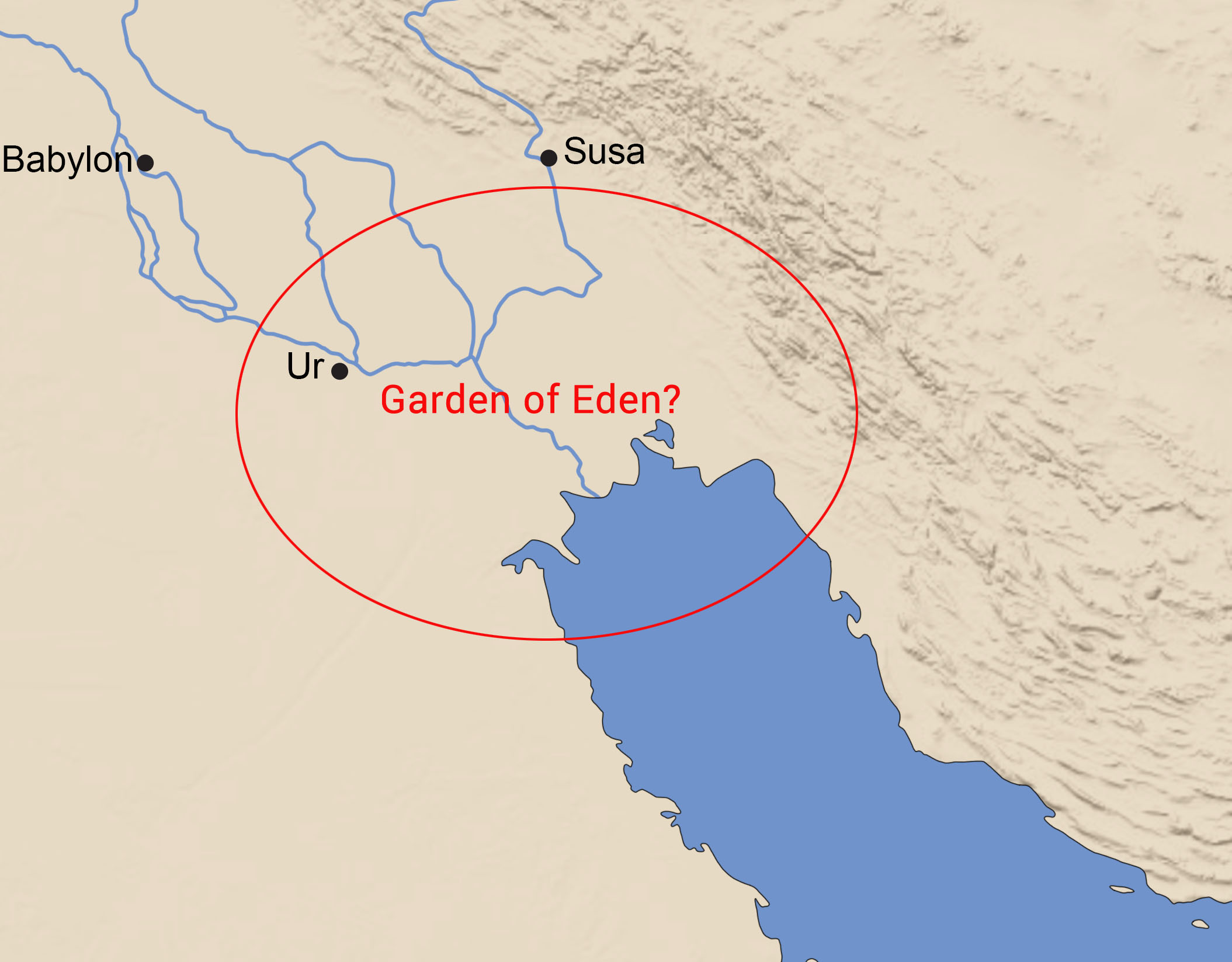
The calendar of the Book of Jubilees is based on a year of 364 days to which it refers as a “complete year”. Since the calendar is fixed from the time of creation, it is divinely mandated for all of eternity. 1 Now Adam knew Eve his wife, and she conceived and bore Cain, and said, "I have acquired a man from the Lord." Then she bore again, this time his brother Abel. Now Abel was a keeper of sheep, but Cain was a tiller of the ground. In this verse the first husband and wife become father and mother. They had two sons, Cain (the farmer) and Abel (the shepherd). Eve was filled with joy, thankfulness and expectation, "I have gotten a man from the Lord." Perhaps she thought that he was the promised seed, the Messiah. Adam and Eve had many sons and daughters but Cain & Abel were first. According to the Book of Jubilees, Eve gave birth to Cain in the third week in the second jubilee and in the fourth she gave birth to Abel. Int he fith she gave birth to her daughter Âwân. In Hebrew Cain means in "a lance"; and by some the name is interpreted to mean "a smith." Cain was a tiller of the ground: of the same occupation his father. The word Abel, in Hebrew means "breath" or "vapor". The shepherd and the sheep are among the most frequently used in the Holy Scripture. 3 And in the process of time it came to pass that Cain brought an offering of the fruit of the ground to the Lord. Abel also brought of the firstborn of his flock and of their fat. And the Lord respected Abel and his offering, but He did not respect Cain and his offering. And Cain was very angry, and his countenance fell. "In the process of time" – meaning God's timing, Cain brought some of his harvest. His offering came from the cursed earth and was gained by works. Grain offerings were accepted by God but not as an attonement for sin. God doesn't look at the worship, but at the worshipper. Cain's heart was not right.. His offering, while acceptable in his own eyes, was not acceptable to God. Abel offered the fat of the first lamb born which was considered to be extra special. The burning of the fat was a pleasing aroma to the Lord. His offering was one of faith. The shedding of blood is a requirement for atonement, the covering of our sin. "By faith, Abel offered God a better sacrifice than Cain did" (Hebrews 11:4). 6 So the Lord said to Cain, "Why are you angry? And why has your countenance fallen? If you do well, will you not be accepted? And if you do not do well, sin lies at the door. And its desire is for you, but you should rule over it." Cain's disappointment and anger was obvious. God responds regardless if one is doing or not doing His will accordingly. Going against God's will, invites sin. Instead of humbling himself and heeding the warning that God had given him, he let his selfishness, wounded pride, jealousy and a guilty conscience harden his heart. Cain had no reason to be angry with his brother, but he became vengeful toward Abel. Self-control and redemption are weapons against sin. 8 Now Cain talked with Abel his brother; and it came to pass, when they were in the field, that Cain rose up against Abel his brother and killed him. Then the Lord said to Cain, "Where is Abel your brother?" He said, "I do not know. Am I my brother's keeper?" Cain's arrogance is hard to digest! This was the first murder in history. The Book of Jubilees records Cain slew Abel in the first year of the third jubilee. When God asked Cain where his brother was, He knew what happened just like when He asked where Adam and Eve were in the garden. This was a rhetorical question. The emphasis on the relationship between Cain and Abel was that being the older brother, he should have looked over his sibling. God gave Cain a chance to confess and repent but instead he denied the crime, as if he could have concealed it from God. He tried to cover a deliberate murder with a deliberate lie. If we confess our sins, He is faithful and just to forgive us our sins and to cleanse us from all unrighteousness. (1 John 1:9) 10 And He said, "What have you done? The voice of your brother's blood cries out to Me from the ground. So now you are cursed from the earth, which has opened its mouth to receive your brother's blood from your hand. When you till the ground, it shall no longer yield its strength to you. A fugitive and a vagabond you shall be on the earth." Precious in the sight of the LORD Is the death of His saints (Psalm 116:15). God hears the sounds of blood shed by the innocent. The cry here should be translated as "scream". Cain's punishment is similar to that of Adam's: "Cursed is the ground for your sake; in toil you shall eat of it all the days of your life." (Genesis 3:17b) The difference is that Cain is cursed himself. 13 And Cain said to the Lord, "My punishment is greater than I can bear! Surely You have driven me out this day from the face of the ground; I shall be hidden from Your face; I shall be a fugitive and a vagabond on the earth and it will happen that anyone who finds me will kill me." Cain showed no remorse. He pitied himself rather than repenting. He was only concerned with the punishment he received. He was banished to a life of wandering and abandoned from the presence of God. He was a fugitive, running away from the sin he committed, far away from the land of his birth, looking over his shoulders, fearful of retaliation from others. He seemed more afraid of being killed himself than to save his soul. If every woman, starting with Eve, each bore 10 children by the age of 40 (and since people were living so long it's presumable that those "child bearing years" would have been greatly extended as well, resulting in many more than 10 children) there would be more than 8000 people by the time Cain was 200. 15 And the Lord said to him, "Therefore, whoever kills Cain, vengeance shall be taken on him sevenfold." And the Lord set a mark on Cain, lest anyone finding him should kill him. God sent a warning that would prevent anyone from vengeance. From the very first, God determined to take punishment into His own hands and protect human life from the passion and willfulness of human vengeance. 16 Then Cain went out from the presence of the Lord and dwelt in the land of Nod on the east of Eden. And Cain knew his wife, and she conceived and bore Enoch. And he built a city, and called the name of the city after the name of his son—Enoch. To Enoch was born Irad; and Irad begot Mehujael, and Mehujael begot Methushael, and Methushael begot Lamech. "East of Eden" is frequently associated with God's judgment. To be removed from the garden meant Cain was sent away from his family and his homeland to the land of Nod. 'Nod' in the Greek language means trembling. Nod is said to be outside of the presence or face of God. Whoever forsakes God, abandons understanding and whose thinking remains wicked remains unsettled. Cain appears as a ruler, like Nimrod, rather than as a religious man. His purpose was much the same as that of the builders of the Tower of Babel, who wanted to keep mankind together that they might form a powerful community. The genealogy tells us the through his line, Lamech was born who was the father-in-law of Moses. 19 Then Lamech took for himself two wives: the name of one was Adah, and the name of the second was Zillah. And Adah bore Jabal. He was the father of those who dwell in tents and have livestock. His brother's name was Jubal. He was the father of all those who play the harp and flute. And as for Zillah, she also bore Tubal-Cain, an instructor of every craftsman in bronze and iron. And the sister of TubalCain was Naamah. Lamech was the seventh generation from Adam. He was the first bigamist going against God's design for marriage. This was the way of the nations but not the way of God. As a consequence of this sin, Lamech lived in tents. God told Adam and Eve to have dominion over the earth and subdue but now they are doing it for their own glory and not for God. This defies the stories we were told about how man evolved from cavemen. Some scholars say that this was the beginning of work and pleasure. Then Lamech said to his wives:
"Adah and Zillah, hear my voice; Wives of Lamech, listen to my speech! We don't know how Lamech was hurt, but at this point, the eye for an eye law had not been instituted that limited how much vengeance one person could have on another. Here are two perspectives: Lamech killed the young man in self-defense so that he was putting a mark on himself just as God put on Cain. The other perspective is that Lamech killed out of vengeance and declared a warning to anyone who goes against him will receive his wrath. 25 And Adam knew his wife again, and she bore a son and named him Seth, "For God has appointed another seed for me instead of Abel, whom Cain killed." And as for Seth, to him also a son was born; and he named him Enosh. Then men began to call on the name of the Lord. Adam and Eve lost two sons. Abel was killed and Cain was exiled. Notice the difference between the Godly lines of Seth verses the ungodly line of Cain. Seth is the one through whom God will send our Savior, as a sacrifice for our sins. St. Augustine wrote "That race (i.e. the human race) we have divided into two classes, one that lives according to man and the other that lives according to God. In symbolic fashion we call these two cities, that is, two communities of men, of which one is predestined to reign eternally with God, the other to suffer eternal punishment with the devil." Enoch, whose training was a close walk with God, was the seventh and noblest of that race. There were 1651 years between the accounts from Adam to the flood. This may not have been written in chronological order but it tells much of its story by means of genealogy. The line from Adam all the way to Noah was ten generations. If you write out the Hebrew meaning of each of the names from Adam to Noah it forms a prophetic statement that summarizes all of scripture!
1. Man appointed mortal sorrow (The fall of man). Side note: Most of the "Chosen Ones" are a second or younger child and were often shepherds: Abel, Isaac, Jacob, Joseph, Judah and David. Bible Study Questions 1. Who was the first recorded son of Adam and Eve?
2. What trade did Cain have?
3. What did Abel bring as a sacrifice?
4. What did Cain say when God asked him where Abel was? 5. How did God protect Cain from being killed by others?
6. In what direction was Nod from Eden?
7. What was the curse placed on Cain for killing his brother?
8. What was the first thing Cain built when he left Eden?
9. Who forged tools out of bronze and iron?
10. Who is avenged seventy-seven times?
|
| Joe, Cassie, Matt | |