Genesis 30 – The House of Jacob
Timeline: 1921 - 1916 BC
|
Jacob - 91 years old Bilhah's Sons Zilpah's Sons Leah's Children
|
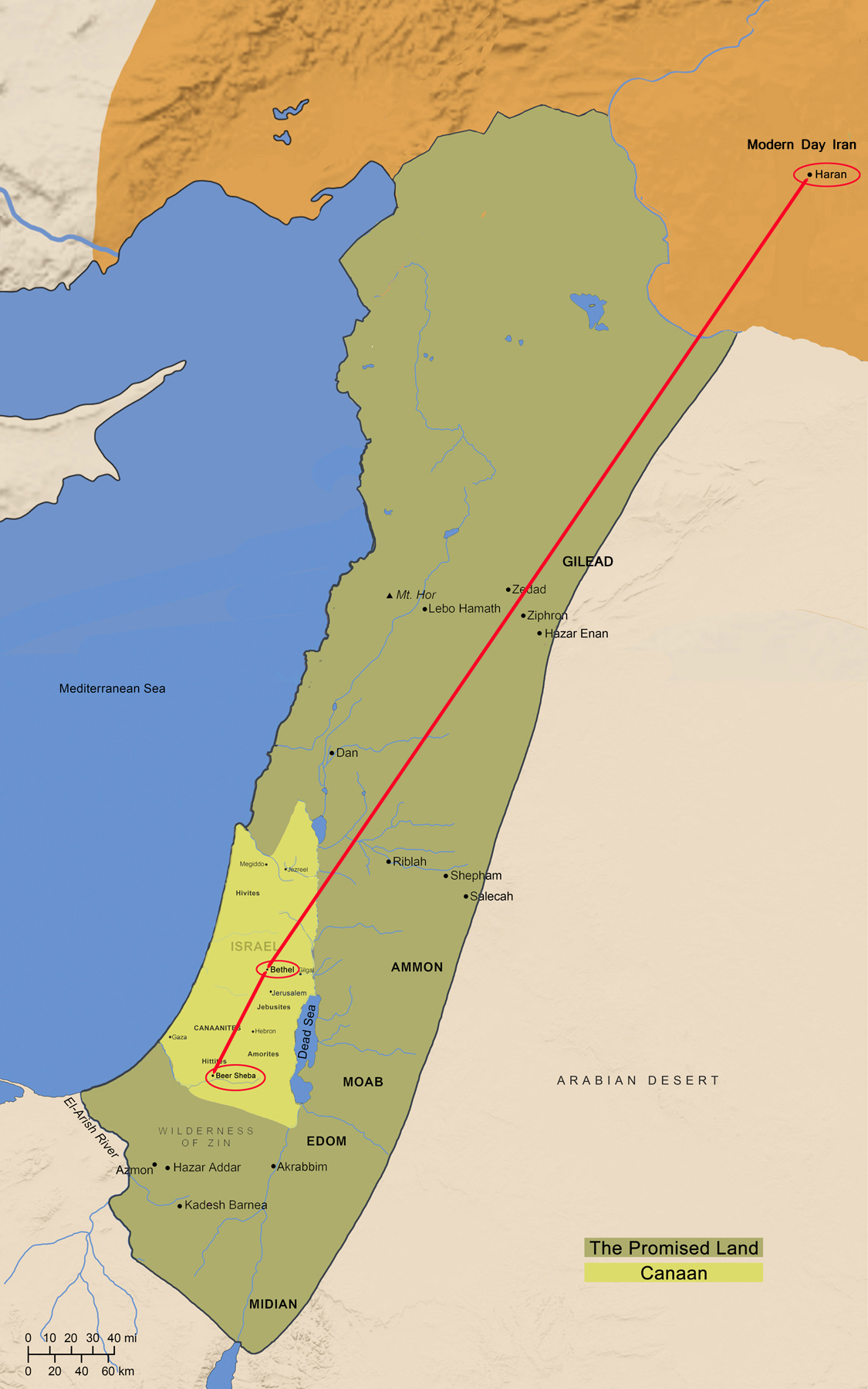
Bitterness and unending rivalry between Rachel and Leah continues. While Rachel was considered beautiful, she was barren. Barrenness was considered a judgment from God in the ancient world. They believed that a deity was responsible for creation in the womb, and it was the deity that opened the womb. Rachel envied Leah since during the first four years, Leah had four boys and Zilpha (Leah's maid servant) had one but Rachel still had none. Leah was envious because Jacob loved Rachel over her. 1 Now when Rachel saw that she bore Jacob no children, Rachel envied her sister, and said to Jacob, 'Give me children, or else I die!' And Jacob's anger was aroused against Rachel, and he said, 'Am I in the place of God, who has withheld from you the fruit of the womb?' Instead of praying or asking Jacob to pray, she expressed her displeasure. Jacob loved Rachel, and therefore scolded her for what she said. Was he not enough for her? He loved her in spite of the fact that she did not bear children. But she did not feel worthy as long as she was barren. 4 So she said, 'Here is my maid Bilhah; go in to her, and she will bear a child on my knees, that I also may have children by her.' Then she gave him Bilhah her maid as wife, and Jacob went in to her. And Bilhah conceived and bore Jacob a son. Then Rachel said, 'God has judged my case; and He has also heard my voice and given me a son.' Therefore she called his name Dan. And Rachel's maid Bilhah conceived again and bore Jacob a second son. Then Rachel said, 'With great wrestlings I have wrestled with my sister, and indeed I have prevailed.' So she called his name Naphtali. Taking things into her own hands, like Sarai, Rachel had Jacob take Bilhah to be her surrogate who had two sons. In that time, the handmaid was the sole property of the mistress so children borne by her were also the property of the mistress. The primary goal of women then was to build up the house of Jacob. 9 When Leah saw that she had stopped bearing, she took Zilpah her maid and gave her to Jacob as wife. And Leah's maid Zilpah bore Jacob a son. Then Leah said, 'A troop comes!' So she called his name Gad. And Leah's maid Zilpah bore Jacob a second son. Then Leah said, 'I am happy, for the daughters will call me blessed.' So she called his name Asher. Leah stopped bearing because Rachel kept Jacob from her so Leah gave Zilpah to Jacob to have more children. 'A troop comes' also means Good Fortune. The Hebrew term 'daughters' means other women would be happy for her. 14 During wheat harvest, Reuben went out into the fields and found some mandrake plants, which he brought to his mother Leah. Rachel said to Leah, "Please give me some of your son's mandrakes." But she said to her, "Wasn't it enough that you took away my husband? Will you take my son's mandrakes too?" "Very well," Rachel said, "he can sleep with you tonight in return for your son's mandrakes." When Jacob came out of the field in the evening, Leah went out to meet him and said, 'You must come in to me, for I have surely hired you with my son's mandrakes.' And he lay with her that night. Reuben, was four years old when he found the mandrakes in the field. The yellow apples are about the size of a nutmeg, with a strong and agreeable odor. Mandrakes are very common in Palestine. They are still used by Arabs, as a supposed means of promoting child-bearing. It was customary that the husband spends a day with each wife in regular succession so Rachel bribes Leah into giving the mandrakes to her and to trade turns. 17 And God listened to Leah, and she conceived and bore Jacob a fifth son. Leah said, 'God has given me my wages, because I have given my maid to my husband.' So she called his name Issachar. Then Leah conceived again and bore Jacob a sixth son. And Leah said, 'God has endowed me with a good endowment; now my husband will dwell with me, because I have borne him six sons.' So she called his name Zebulun. 21 Afterward she bore a daughter, and called her name Dinah. It was not the mandrakes that Leah had received such fruitfulness, but from God the author of life. Had Jacob followed God's wisdom and married only one wife, this ungodly competition would not have taken place. [1] Leah had the first mentioned daughters of Jacob. Girls were not ordinarily mentioned, unless they play a prominent role of some kind as we will see as we go on to the next chapters. Jacob had several daughters, though they were never mentioned by name. The birth of a girl was regarded in the East as a misfortune; no feast was made and no congratulations were offered to the parents. 22 Then God remembered Rachel, and God listened to her and opened her womb. And she conceived and bore a son, and said, 'God has taken away my reproach.' So she called his name Joseph, and said, 'The Lord shall add to me another son.' Rachel had been barren for twenty-six years. The idea of God's sovereignty over the womb is a repeated theme in the Bible. Rachel no longer trusted "love-apples," but looked to God for the great blessing of children. Joseph and Dinah appear to have been born in the same year. Then she prayed for another son from the Lord. 25 And it came to pass, when Rachel had borne Joseph, that Jacob said to Laban, 'Send me away, that I may go to my own place and to my country. Give me my wives and my children for whom I have served you, and let me go; for you know my service which I have done for you.' Joseph was born after fourteen years of service were completed plus another six years before Jacob left Padan-aram. Jacob continued with Laban for a total of twenty years without pay, receiving merely maintenance for himself and family. Jacob did what God had told him to do and told Laban he was leaving with his family, Laban's daughters and grandchildren. He was willing to leave without compensation so he would have had to start from scratch building his household. 27 And Laban said to him, 'Please stay, if I have found favor in your eyes, for I have learned by experience that the Lord has blessed me for your sake.' Then he said, 'Name me your wages, and I will give it.' Jacob stayed much long than he should have, he needed to return to Beersheba, where his father and mother lived, and whom, no doubt, he longed to see, and to establish his own household. However Laban was quite comfortable with having Jacob around to take care of his livestock and begged him to stay. He recognized that Jacob's God was the reason he was blessed with wealth, but in the next chapter we will see that he still worshipped his idols. 29 So Jacob said to him, 'You know how I have served you and how your livestock has been with me. For what you had before I came was little, and it has increased to a great amount; the Lord has blessed you since my coming. And now, when shall I also provide for my own house?' It was now time for Jacob to leave the exile in Haran and to return to the Promised Land. Jacob made his case to Laban who once again repeated the offer. A law at that time that stated that when you release an indentured servant (which Jacob was) you are to give him a generous farewell gift from your flock, among other things.[2] So Jacob should have gotten something for all he did for Laban. Instead, Laban wanted him to stay on and continue working for him to continue making him wealthier. 31 So he said, 'What shall I give you?' And Jacob said, 'You shall not give me anything. If you will do this thing for me, I will again feed and keep your flocks: Let me pass through all your flock today, removing from there all the speckled and spotted sheep, and all the brown ones among the lambs, and the spotted and speckled among the goats; and these shall be my wages. So my righteousness will answer for me in time to come, when the subject of my wages comes before you: every one that is not speckled and spotted among the goats, and brown among the lambs, will be considered stolen, if it is with me.' Jacob didn't want Laban to GIVE him anything but he was willing to earn some. In the East the goats, as a rule, are black or dark-brown, and that the sheep for the most part are white. The others were considered more valuable but also more rare. So Jacob asked for a few of Laban's flock as wages for a few more years of labor. If Jacob took only the rare ones, they would be distinguished from the rest so no one could say he stole them from Laban. 34 And Laban said, 'Oh, that it were according to your word!' So he removed that day the male goats that were speckled and spotted, all the female goats that were speckled and spotted, every one that had some white in it, and all the brown ones among the lambs, and gave them into the hand of his sons. Then he put three days' journey between himself and Jacob, and Jacob fed the rest of Laban's flocks. Laban sent his sons away with all the valuable sheep and goats BEFORE Jacob could pick from them. Then they couldn't mate with which Jacob agreed to take care of. In the next chapter we will see that God gave Jacob wisdom and blessed him. 37 Now Jacob took for himself rods of green poplar and of the almond and chestnut trees, peeled white strips in them, and exposed the white which was in the rods. And the rods which he had peeled, he set before the flocks in the gutters, in the watering troughs where the flocks came to drink, so that they should conceive when they came to drink. So the flocks conceived before the rods, and the flocks brought forth streaked, speckled, and spotted. Then Jacob separated the lambs, and made the flocks face toward the streaked and all the brown in the flock of Laban; but he put his own flocks by themselves and did not put them with Laban's flock. And it came to pass, whenever the stronger livestock conceived, that Jacob placed the rods before the eyes of the livestock in the gutters, that they might conceive among the rods. But when the flocks were feeble, he did not put them in; so the feebler were Laban's and the stronger Jacob's. Thus the man became exceedingly prosperous, and had large flocks, female and male servants, and camels and donkeys. Jacob used selective breeding to increase his flocks and kept them separate from Laban's. The branches he put into the water created an aphrodisiac which caused them to breed more quickly. Laban agreed to let Jacob pick out animals with certain characteristics and remember that the son's took the best ones away leaving Jacob to tend the rest. Jacob was able to breed quality animals and then traded some of his flocks in order to acquire servants, camels and donkeys. Bible Study Questions 1. Instead of going to Jacob with her anger, what should Rachel have done instead?
2. Why did Rachel give her servant, Bilhah, to Jacob?
3. What was the plant that Reuben found during the wheat harvest in a field?
4. What did Leah do when she stopped bearing?
5. What did God do when He remembered Rachel?
6. Who was the mother of Dinah?
7. Who was the mother of Joseph?
8. What did Jacob request from Laban as his wages for his long service?
9. Why did Laban send his sons away with the goats and sheep?
10. How did Jacob become so knowledgeable about raising livestock?
|
| Joe, Cassie, Matt, Kelly | |