Genesis 2 – The Garden of Eden
Timeline: Before 4000 BC
|
Resources |
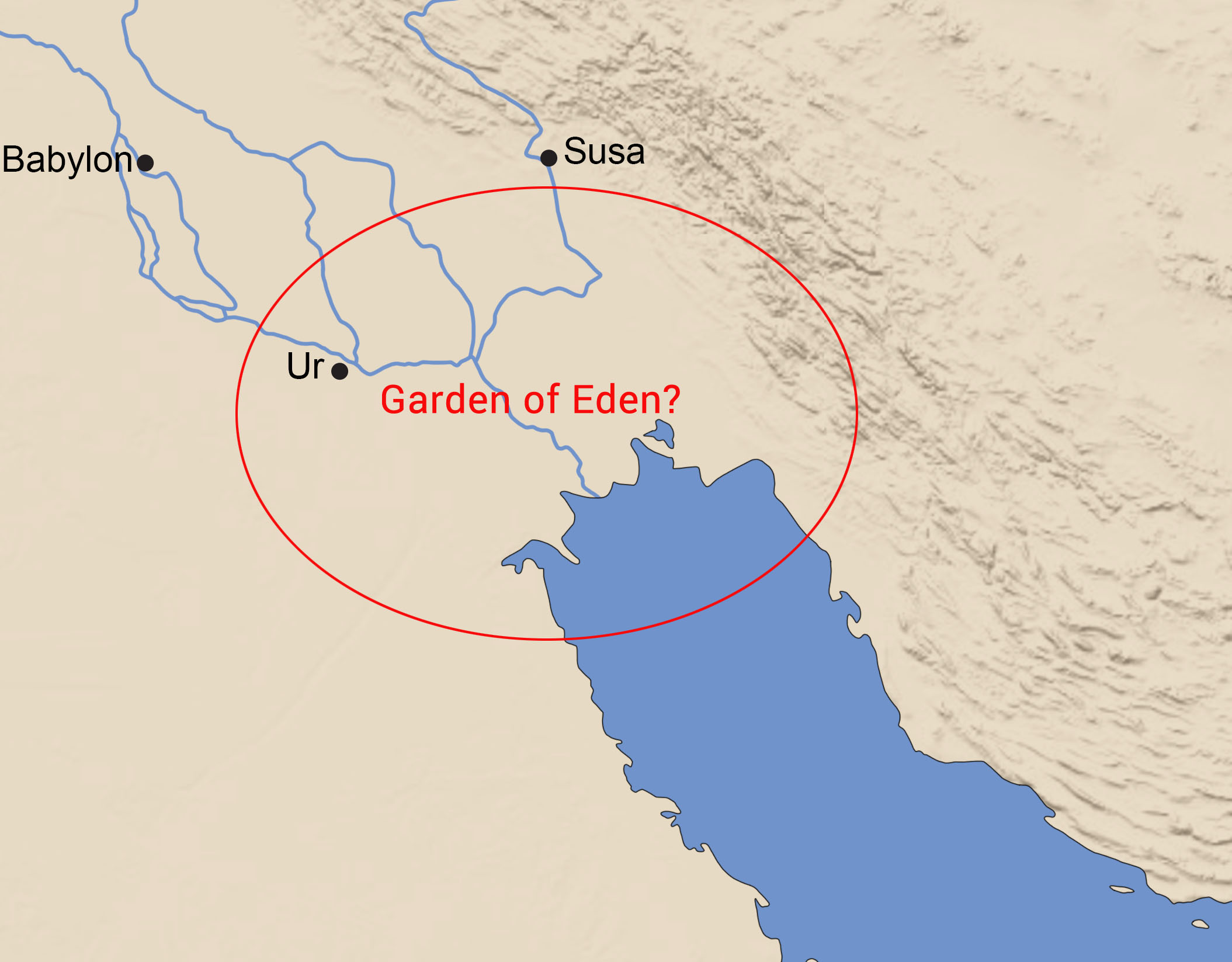
1 Thus the heavens and the earth, and all the host of them, were finished. And on the seventh day God ended His work which He had done, and He rested on the seventh day from all His work which He had done. Then God blessed the seventh day and sanctified it, because in it He rested from all His work which God had created and made. Day 7: In the first verse, the “host of them” refers to the Angels who were created during this time. God's work is so perfect that nothing can be added to it nor taken from it. God did not need rest on the seventh day because He was tired. The Hebrew word seven (saba or sabea) means satisfaction or fullness. It appears over 700 times in the Scripture. The seventh day was a gift to man for rest and replenishment. He blessed it and sanctified it because the Sabbath is a shadow of the rest available through the person and work of Jesus Christ. 4 This is the history of the heavens and the earth when they were created, in the day that the Lord God made the earth and the heavens, before any plant of the field was in the earth and before any herb of the field had grown. For the Lord God had not caused it to rain on the earth, and there was no man to till the ground; but a mist went up from the earth and watered the whole face of the ground. Chapter two is not a chronological order, but a logical one. It looks at God’s work of creation from a different vantage point. It helps us understand who we are and how to interpret our existence on earth. This was something no human was present to witness. God undoubtedly gave Adam the history of Creation who passed it through the generations to Moses, the author of Genesis. 7 And the Lord God formed man of the dust of the ground, and breathed into his nostrils the breath of life; and man became a living being. On the sixth day we see the formation of man from dust. God breathed Spirit into man which brought Adam to life. All life is formed from the earth. We all share the same elements but we are set apart from the plants and animals because man was specially created by God’s breathing some of His own breath into him. Second Timothy tells us that all Scripture is God-Breathed. It is the same breath that brought man to life from dust. 8 The Lord God planted a garden eastward in Eden, and there He put the man whom He had formed. And out of the ground the Lord God made every tree grow that is pleasant to the sight and good for food. The tree of life was also in the midst of the garden, and the tree of the knowledge of good and evil. God made a garden to be a perfect habitation for Adam (and later, Eve). In the midst of the garden was the tree of life. Revelation 2:7 the angel says “…to him who overcomes I will give to eat from the tree of life.” The angel is speaking of repenting. We also read about this tree in Revelation 22. Unfortunately, though this tree existed in the garden, Adam and Eve should not have chosen to eat from it. The tree of the knowledge of good and evil was the only tree that God said specifically that they were not to eat from. The knowledge of good and evil that came through this tree gave man the ability to be independent of God. We have this choice today. Repent to overcome our sins or be independent of God and do whatever we desire. The choice is ours and so are the consequences. 10 Now a river went out of Eden to water the garden, and from there it parted and became four riverheads. The name of the first is Pishon; it is the one which skirts the whole land of Havilah, where there is gold. And the gold of that land is good. Bdellium and the onyx stone are there. The name of the second river is Gihon; it is the one which goes around the whole land of Cush. The name of the third river is Hiddekel; it is the one which goes toward the east of Assyria. The fourth river is the Euphrates. Two individuals named Havilah are listed in the Table of Nations as descendants of Noah. The name also appears in Genesis 25:18, defining the territory of the Ishmaelites. Extra-biblical literature mentions Havilah as the source of precious jewels used by the Amorites. Gihon is described as "encircling the entire land fo Cush (Ethiopia). The four rivers are shrouded in mystery. The Pishon is the Nile river. There is a spring in Jerusalem today called Gihon. The Hiddekel (Tigris) River is in the region of ancient Babylonia, which is present day Iraq. Euphrates runs almost parallel to the Trigis. These two rivers defined a large part of the Fertile Crescent, the cradle of civilization in ancient times. The Great Flood changed the landscape so the original locations of the rivers are not known. 15 Then the Lord God took the man and put him in the Garden of Eden to tend and keep it. And the Lord God commanded the man, saying, “Of every tree of the garden you may freely eat; but of the tree of the knowledge of good and evil you shall not eat, for in the day that you eat of it you shall surely die.” Man was created to work and keep up the spectacular paradise. The word “tend” here comes from the Hebrew word “avodah” which means “to work.” “Avodah” also means “to worship”. God looks at our work as worship. Work is something good for man and was part of Adam’s perfect existence before the fall. For even when we were with you, we would give you this command: If anyone is not willing to work, let him not eat. (2 Thessalonians 3:10) Isaiah 65:21-23 describes life and work in the New Jerusalem saying there will be the building of houses (21), farming (21), and work which is no longer in vain (23).We will work in the New Heaven, but there will be no fatigue; we can go about that work continuously without worry or tiredness. Adam was free to eat from any tree. The Tree of Life was not disallowed. However, the Tree of Knowledge was strictly forbidden. For Adam to have free will there had to be a choice. God want our love and obedience to be freely given, not forced. Adam only had one way he could sin. God explained clearly the consequences for disobedience. 18 And the Lord God said, “It is not good that man should be alone; I will make him a helper comparable to him.” Out of the ground the Lord God formed every beast of the field and every bird of the air, and brought them to Adam to see what he would call them. And whatever Adam called each living creature, that was its name. So Adam gave names to all cattle, to the birds of the air, and to every beast of the field. But for Adam there was not found a helper comparable to him. It was not God’s will that the man should be alone. He marches the colorful parade of diverse wild life before the human and invites him to give names to the various creatures. This gave Adam a part in His creation. The act of naming in the ancient world was a means of defining and shaping the character and essence of the one named. Adam was the first and greatest of all biologists and botanists. Adam saw that the animals came in pairs and he had no mate. Since God deliberately had Adam name the animals. He used this to prepare Adam to receive the gift of woman. 21 And the Lord God caused a deep sleep to fall on Adam, and he slept; and He took one of his ribs, and closed up the flesh in its place. Then the rib which the Lord God had taken from man He made into a woman, and He brought her to the man. God used Adam’s own body to build Eve to forever remind him of their essential oneness. The story that women have one more rib than men because of the way Eve was built is a myth. God took some of Adam’s cells and changed their genetic blueprint when he built Eve. There is a beautiful Jewish tradition saying God made woman, not out of man’s foot to be under him, or out of his head to be over him, but “She was taken from under his arm that he might protect her and from next to his heart that he might love her”. Not only was the woman to be a helper but also she was made comparable to the man. She should be considered and honored as such. A woman or wife cannot be regarded as a mere tool or worker, but as an equal partner in God’s grace and an equal human being. 24 Therefore a man shall leave his father and mother and be joined to his wife, and they shall become one flesh. And they were both naked, the man and his wife, and were not ashamed. This passage forms the Bible’s foundation for the understanding of marriage. This is instruction for future generations since Adam and Eve didn’t have a mother or father. The love between Adam and Eve gives us a greater picture of the relationship that God desires to have with us. Both were naked – totally open and exposed as a person before God and man with no guilt or shame.They were sinless. They didn’t have anything to cover up. Bible Study Questions 1. What did God do on the 7th day?
3. Where did God plant a garden?
4. How many rivers were mentioned in this verse?
5. God blessed the seventh day because...
6. After God had created Adam, where did He put him?
7. What commandment did God give Adam?
8. Why did God create Adam first?
9. Which statement is not true?
10. Were Adam and Eve both naked?
|
| Joe, Cassie, Matt, Kelly, Noah, Mary | |