Genesis 14 – Abram Saves Lot
Timeline: 1913 BC
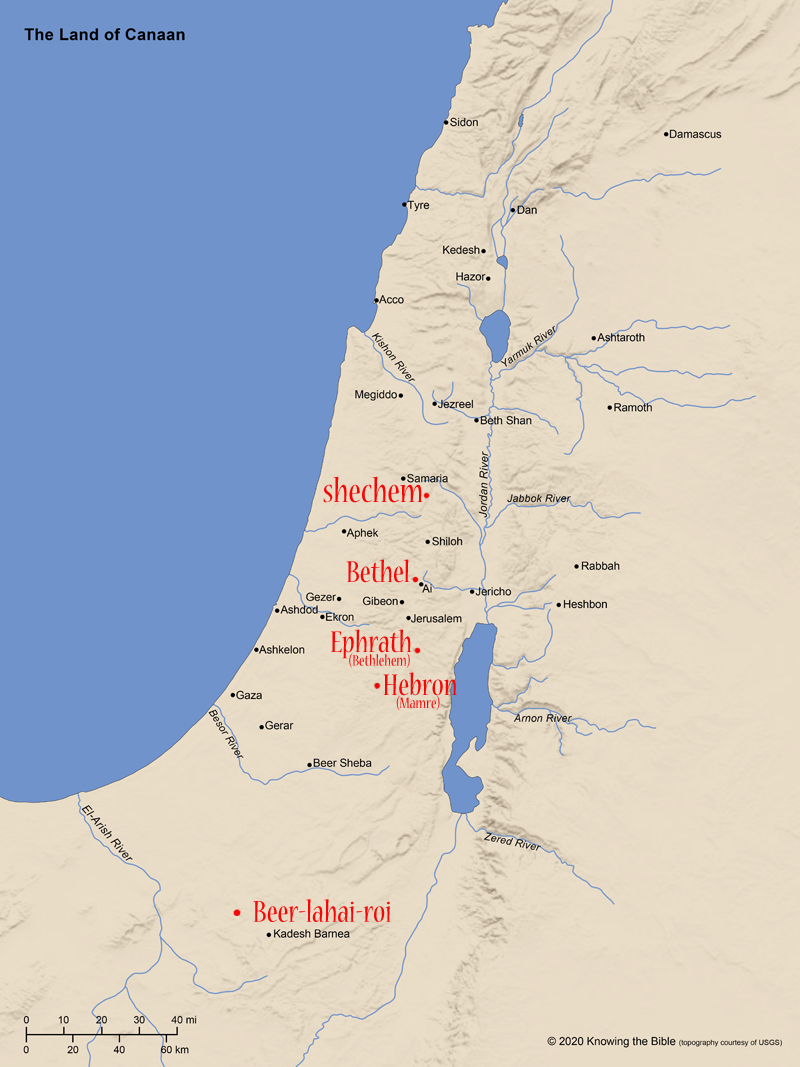
A major trade route called The King's Highway ran from Egypt to Mesopotamia through the Jordan Valley. It was an important thoroughfare for north-south trade. Five Cities of the Plain; Sodom, Gomorrah, Admah, and Zeboiim, plus tiny Zoar, were also known as the Cities of the Valley. City-states and small kingdoms were frequently in conflict, often over resources, trade routes, or territorial expansion.
For twelve years, the Mesopotamian kingdoms lead by Chedorlaomer, the Shemite king of Elam, ruled over the cities imposing taxes and servitude on them assuring the trade routes in the West open to for the future. Then, in the thirteenth year, the kings of the five cities revolted by refusing to pay tribute which resulted in the first war recorded in the Bible.
1-4 And it came to pass in the days of Amraphel king of Shinar, Arioch king of Ellasar, Chedorlaomer king of Elam, and Tidal king of nations, that they made war with Bera king of Sodom, Birsha king of Gomorrah, Shinab king of Admah, Shemeber king of Zeboiim, and the king of Bela (that is, Zoar). All these joined together in the Valley of Siddim (that is, the Salt Sea). Twelve years they served Chedorlaomer, and in the thirteenth year they rebelled.
Shemite Kings in the North East
Descendants of Shem
Chedorlaomer king of Elam
Amraphel king of Shinar
Arioch king of Ellasar
Tidal king of NationsVS Hamite Kings in the South
Descendants of Ham
Bera king of Sodom
Birsg of Gomorrah
Shinab king of Admah
Shemeber king of Zeboiim
King of Bela (that is, Zoar)Then in the fourteenth year, Chedorlaomer and his allies attacked and subdued every city, king, and people group from the north east, all the way to the edge of Canaan's southern wilderness.
5-7 In the fourteenth year Chedorlaomer and the kings that were with him came and attacked the Rephaim in Ashteroth Karnaim, the Zuzim in Ham, the Emim in Shaveh Kiriathaim, and the Horites in their mountain of Seir, as far as El Paran, which is by the wilderness. Then they turned back and came to En Mishpat (that is, Kadesh), and attacked all the country of the Amalekites, and also the Amorites who dwelt in Hazezon Tamar.
Shemite Kings in the North East Descendants of Shem
Chedorlaomer king of Elam (Persia)
Amraphel king of Shinar (Chaldea)
Arioch king of Ellasar
Tidal king of nationsVS Hamite Kings in the South Descendants of Ham
Rephaim in Ashteroth Karnaim
Zuzim in Ham
Emim in Shaveh Kiriathaim
Horites in Seir
Amalekites in Kadesh
Amorites in Hazezon TamarThe narrative here focuses on the capture of Lot from Sodom, highlighting the events from the war that took place in the thirteenth year.
8-12 And the king of Sodom, the king of Gomorrah, the king of Admah, the king of Zeboiim, and the king of Bela (that is, Zoar) went out and joined together in battle in the Valley of Siddim against Chedorlaomer king of Elam, Tidal king of nations, Amraphel king of Shinar, and Arioch king of Ellasar—four kings against five. Now the Valley of Siddim was full of asphalt pits; and the kings of Sodom and Gomorrah fled; some fell there, and the remainder fled to the mountains. Then they took all the goods of Sodom and Gomorrah, and all their provisions, and went their way. They also took Lot, Abram's brother's son who dwelt in Sodom, and his goods, and departed.
The Siddim Valley was full of bitumen (or tar) pits. This petroleum substance oozed up from under the ground there. It was used in ancient times as mortar in building construction.
After the battle the forces of the eastern kings pillaged the cities of Sodom and Gomorrah, they took their possessions and provisions, leaving the people who were not taken captive destitute. Their cities were not destroyed but Lot, Abram's nephew, was among the captives taken prisoner.
13-16 Then one who had escaped came and told Abram the Hebrew, for he dwelt by the terebinth trees of Mamre the Amorite, brother of Eshcol and brother of Aner; and they were allies with Abram. Now when Abram heard that his brother was taken captive, he armed his three hundred and eighteen trained servants who were born in his own house, and went in pursuit as far as Dan. He divided his forces against them by night, and he and his servants attacked them and pursued them as far as Hobah, which is north of Damascus. So he brought back all the goods, and also brought back his brother Lot and his goods, as well as the women and the people.
Abram is identified as a Hebrew indicating that he is an outsider in the Canaanite society. He had lived in Mamre on land owned by Amorites, and apparently there were also alliances between them. Lot is not literally Abram's brother but his nephew. Here it is used as a term of endearment.
Abram would probably have stayed out of the conflict except that Lot had been taken captive. He responded immediately, leaving his herds and family to risk his own life for the sake of his nephew. They traveled as far as Dan, approximately 120 miles away. Depending on the Divine blessing, he fought the battle by faith, along with the advantage of surprise and darkness. Abram and his trained servants defeated the enemy and brought freedom to the captives. The city of Sodom was obviously restored.
17 And the king of Sodom went out to meet him at the Valley of Shaveh (that is, the King's Valley), after his return from the defeat of Chedorlaomer and the kings who were with him.
The king of Sodom must have been among them who survived the tar pits and ran to the mountains.
18-20 Then Melchizedek king of Salem brought out bread and wine; he was the priest of God Most High. And he blessed him and said:
Melchizedek king of Salem: The name Melchizedek means King of Righteousness. He was the king of Salem, the original Jerusalem. He was the priest of God Most High. Melchizedek is both king and priest, without genealogy or end of days. In these ways, he is "made like the Son of God," and remains a priest perpetually. The Son of God is not made like him, but he is made like the Son of God, presented in Scripture in such a way that he points to the truth about the Son of God. Melchizedek brought out bread and wine and blessed Abram:
"Blessed be Abram of God Most High,
Possessor of heaven and earth;
And blessed be God Most High,
Who has delivered your enemies into your hand."And he gave him a tithe of all.
And Abram worshiped him and gave him a tithe of one-tenth of of the spoils he retrieved from the raid.
21 Now the king of Sodom said to Abram, "Give me the persons, and take the goods for yourself."
The king of Sodom offered the goods, the spoils, the wealth from the war but requested that the people be returned to him. It is unclear whether this offer is from gratefulness or if he was trying to bribe or win over Abram as a friend. Technically, according to code of Hammurabi of that day, all the people and all the goods belonged to Abram.22-24 But Abram said to the king of Sodom, "I have raised my hand to the Lord, God Most High, the Possessor of heaven and earth, that I will take nothing, from a thread to a sandal strap, and that I will not take anything that is yours, lest you should say, 'I have made Abram rich'— except only what the young men have eaten, and the portion of the men who went with me: Aner, Eshcol, and Mamre; let them take their portion."
Abram abandoned his rights, and chose to give God the glory of the victory. The only thing he kept back was the food his men ate and the possessions that belonged to Aner, Eshol and Mamre which were returned to them. Abram asks that they receive a share of the loot, which suggests that they did go with him.