Exodus 10 - 11 Locusts & Darkness / Death of the Firstborn
Timeline: 1450 BC
|
|
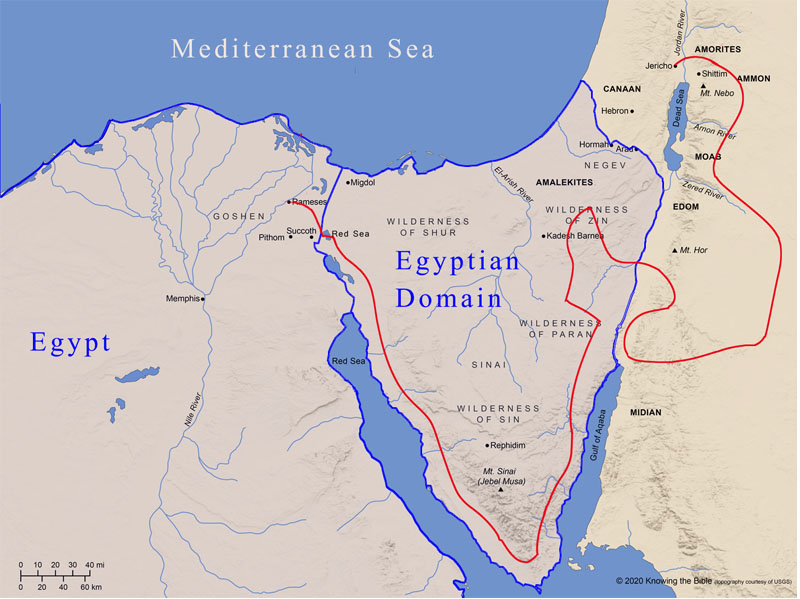
II Peter 3:9 The Lord is not slack concerning His promise, as some count slackness, but is longsuffering toward us, not willing that any should perish but that all should come to repentance. The first nine plagues are divided into groups of three. Each group gave warning, warning, then no warning. In the first three plagues, God used Aaron's rod as the instrument to bring forth the plagues. They Dealt with comfort of the Egyptians and the Jewish people. Then In the middle three plagues, it is not mentioned attack their possessions The last three plagues are from Moses result in death and destruction. After all the previous disasters, Pharaoh continually pretended to humble himself, but as soon as the crisis was over, he refused to let God's people go to worship Him. As God hardened Pharaoh's heart, He strengthened Moses' faith. The Exodus judgments were intended to complete the display of God's power, not to change Pharaoh's mind. 1 Now the Lord said to Moses, "Go in to Pharaoh; for I have hardened his heart and the hearts of his servants, that I may show these signs of Mine before him, and that you may tell in the hearing of your son and your son's son the mighty things I have done in Egypt, and My signs which I have done among them, that you may know that I am the Lord." God hardening Pharaoh's heart by allowing him to have what he sinfully desired – a hard heart against the LORD and His people. Pharaoh was more than a man; he considered himself a god, and the Egyptians agreed. His power and authority were supreme and there was no constitution or law or legislature higher or even remotely equal to him. His servants lived to serve him and therefore they hardened their hearts as well. After a long period of slavery the Jewish people needed time to grow in their faith. The first three plagues must have affected the Israelites in order to prove God's existence, authority and power. The difference was that Israel had a prophet in Moses, to explain to them that their God is the true Jehovah. God's work was not only for the sake of the generation of Moses and Pharaoh, but for every generation, including ours. Throughout history God has done certain things so that people from every era can learn from the mistakes or successes of the saints and from how God worked Himself. 3 So Moses and Aaron came in to Pharaoh and said to him, "Thus says the Lord God of the Hebrews: 'How long will you refuse to humble yourself before Me? Let My people go, that they may serve Me. Or else, if you refuse to let My people go, behold, tomorrow I will bring locusts into your territory. And they shall cover the face of the earth, so that no one will be able to see the earth; and they shall eat the residue of what is left, which remains to you from the hail, and they shall eat every tree which grows up for you out of the field. They shall fill your houses, the houses of all your servants, and the houses of all the Egyptians—which neither your fathers nor your fathers' fathers have seen, since the day that they were on the earth to this day.' " And he turned and went out from Pharaoh. Because of Pharoah's pride and obstinacy, he simply didn't want to give into God. He warned Pharaoh over and over again to humble himself but he believed he had survived the plagues because of his god's protection or his own strength in spite of the destruction of Egypt. So Moses and Aaron cautioned Pharoah what was coming next if he refused to relinquish God's people. This display of power is unprecedented in all history. It will only be equaled and exceeded during the Tribulation. 7 Then Pharaoh's servants said to him, "How long shall this man be a snare to us? Let the men go, that they may serve the Lord their God. Do you not yet know that Egypt is destroyed?" The populace of Egypt was losing patience with the Pharaoh's stubbornness. To challenge Pharoah was risking punishment or even death. However, their fear of God was mightier than their fear of their leader. They could see that God had more power than Pharoah or their gods. They feared the annihilation of Pharaoh and Egypt along with it. 8 So Moses and Aaron were brought again to Pharaoh, and he said to them, "Go, serve the Lord your God. Who are the ones that are going?" And Moses said, "We will go with our young and our old; with our sons and our daughters, with our flocks and our herds we will go, for we must hold a feast to the Lord." Then he said to them, "The Lord had better be with you when I let you and your little ones go! Beware, for evil is ahead of you. Not so! Go now, you who are men, and serve the Lord, for that is what you desired." And they were driven out from Pharaoh's presence. Then Pharaoh made his third attempt to negotiate a face-saving compromise. He's implyed that not all would leave. Pharaoh would have taken hostages from the Israelites for their return, by holding their wives and children in captivity. Pharaoh's sarcastic tone implied a threat to inflict the evil of punishment upon them, if they would not comply with his terms, at the same time again mocking God. The word "driven" shows just how angry Pharaoh was. Once again, he wanted to exert his authority by driving them out. 12 Then the Lord said to Moses, "Stretch out your hand over the land of Egypt for the locusts, that they may come upon the land of Egypt, and eat every herb of the land—all that the hail has left." So Moses stretched out his rod over the land of Egypt, and the Lord brought an east wind on the land all that day and all that night. When it was morning, the east wind brought the locusts. And the locusts went up over all the land of Egypt and rested on all the territory of Egypt. They were very severe; previously there had been no such locusts as they, nor shall there be such after them. For they covered the face of the whole earth, so that the land was darkened; and they ate every herb of the land and all the fruit of the trees which the hail had left. So there remained nothing green on the trees or on the plants of the field throughout all the land of Egypt. Locust always enter Egypt either from the south or from the east. They come with a wind, since they cannot possibly fly any considerable distance without one. Ordinary swarms are confined to particular districts but this swarm covered the face of the earth, meaning Egypt with the exception of Gochen where God's people resided. The volcanic eruption on nearby Santorini may have created favorable conditions for the locusts. The ash fallout caused weather anomalies, which translates into higher precipitations and higher humidity fosters the presence of the locusts, or so says scientists. Egypt was famous for its fruits, which consisted of figs, grapes, olives, mulberries, pomegranates, dates, pears, plums, apples, peaches, and more. In Ex 9:4 "the wheat and the spelt were not ruined, for they ripen late," but they would be a feast for the locusts. The trees and fields appeared as if they had been burnt by fire. The locusts would not only affect plant life, they would also make the daily life of the Egyptians miserable. The Egyptians kept the Jewish people away from their families in order to prevent crush this nation and prevent its growth by forcing them to plant wheat, barley, beans and lentils and to pick the fruit off the trees. Ironically, God used the locusts to devour all the crops from the fields in which the Jews had toiled. This plague parallels the first and fifth trumpet judgments: Throughout ancient history, there have been numerous gods and goddesses related to agriculture. God mocked Pharaoh, the Egyptian gods, the Egyptian might, and in the end the Egyptian army. Shu - the god of peace, lions, air, and wind. 16 Then Pharaoh called for Moses and Aaron in haste, and said, "I have sinned against the Lord your God and against you. Now therefore, please forgive my sin only this once, and entreat the Lord your God, that He may take away from me this death only." Although the confession was probably sincere at the time; it was short-lived. It's easy to confess sin when the consequences are upon us. However, he did keep his promise of "only this once". As promised, He did not ask any more for the removal of a plague. Pharoah asked Moses and Aaron to forgive his sin and to pray on his behalf but refused to entreat the Lord himself. 18 So he went out from Pharaoh and entreated the Lord. And the Lord turned a very strong west wind, which took the locusts away and blew them into the Red Sea. There remained not one locust in all the territory of Egypt. But the Lord hardened Pharaoh's heart, and he did not let the children of Israel go. Moses complied to show the hardened king the greatness of the divine long-suffering though he made no distinct promise of releasing the people. Moses knew from experience that he would not release his people. Locust infestation happens in that region from time to time. Three weeks before Passover in 2013, Egypt was swarmed by locusts and again in November, 2004. None, however was as devastating as the one that took place here. The notable miracle here is that God orchestrated their arrival and departure with his supernatural control of the wind. The miracles of the plagues were not about convincing Pharaoh; they were for the Hebrews' benefit, to demonstrate the power of their God. The Israelites had been living in Egypt for a long time at this point and many of them had been born and raised there so some of them had stopped believing in the real God and had started following the Egyptian religion and praying to their idols. God wanted to free them, and the Egyptians, from the lies of a false religion. 21 Then the Lord said to Moses, "Stretch out your hand toward heaven, that there may be darkness over the land of Egypt, darkness which may even be felt." So Moses stretched out his hand toward heaven, and there was thick darkness in all the land of Egypt three days. They did not see one another; nor did anyone rise from his place for three days. But all the children of Israel had light in their dwellings. As expected, there was no warning for this ninth plague. God abandoned Egypt and when that happened, darkness was left in the wake of His withdrawal. Darkness is a biblical sign of God's judgment and three days is a symbolic representation for the fullness of time, the completion of a particular activity. In this case, the three days of darkness related to the "three day journey" that Israel requested to go into the wilderness to sacrifice to the Lord their God. Some scholars say the plague of darkness may have been a solar eclipse, which according to NASA, occurred on March 5, 1223 B.C. Others assume it was volcanic ash from the Santorini eruption mentioned earlier. However, the darkness they felt was more than an eclipse. It was "cave darkness" where there was no light whatsoever, no sun, moon or even stars. Cave darkness is a special kind of darkness, you cannot even see your own hand in front of your face. If you think you can, it's your brain trying to compensate for the utter lack of light. There is dark, and then there is cave dark. The Egyptians were unable to supply any sort of artificial remedy for this darkness and although it was just as dark in Goshen, the Israelites had light in their homes. Once again, God made a distinction between Egypt and Gochen. God, in His sovereignty, showed His might even over the greatest of Egypt's gods, Ra, the god of the sun. They believed that the sunrise in the east symbolized Ra's victory over the demonic powers of the netherworld, and that sunset indicated that these forces of darkness were waging war against Ra. In the pantheon of Egyptian gods, more gods represented the sun, moon and stars than any other part of creation. Revelation 16:10-11 Then the fifth angel poured out his bowl on the throne of the beast, and his kingdom became full of darkness; and they gnawed their tongues because of the pain. They blasphemed the God of heaven because of their pains and their sores, and did not repent of their deeds. 24 Then Pharaoh called to Moses and said, "Go, serve the Lord; only let your flocks and your herds be kept back. Let your little ones also go with you." But Moses said, "You must also give us sacrifices and burnt offerings, that we may sacrifice to the Lord our God. Our livestock also shall go with us; not a hoof shall be left behind. For we must take some of them to serve the Lord our God, and even we do not know with what we must serve the Lord until we arrive there." Pharaoh tries to negotiate with Moses for the fourth time. This time, he wants to hold the livestock hostage as a pledge of their return. They would be placed in certain places under the guard of Egyptians, Pharoah considers, as sufficient security for their return; since without cattle they would be unable to support life for many days in the wilderness. Moses refused the offer and boldly demanded that he take the livestock with them. How can you make sacrifices without livestock? 27 But the Lord hardened Pharaoh's heart, and he would not let them go. Then Pharaoh said to him, "Get away from me! Take heed to yourself and see my face no more! For in the day you see my face you shall die!" Oh Pharoah, be careful what you wish for. He cursed himself with this threat! Had he forgotten how often he had sent for Moses to ease him of his plagues? While Pharoah was threatening Moses, God revealed a secret revelation to Moses. Chapter 11 is inserted here because it fits chronologically. 1 And the Lord said to Moses, "I will bring one more plague on Pharaoh and on Egypt. Afterward he will let you go from here. When he lets you go, he will surely drive you out of here altogether. Speak now in the hearing of the people, and let every man ask from his neighbor and every woman from her neighbor, articles of silver and articles of gold." 3 And the Lord gave the people favor in the sight of the Egyptians. Moreover the man Moses was very great in the land of Egypt, in the sight of Pharaoh's servants and in the sight of the people. The tenth and last plague is intended to stand apart from the rest. Unlike the other plagues, God spoke to Moses who appeared before Pharoah to deliver His commands. This time, God spoke to Moses while he was in the presence of Pharoah. https://www.workingpreacher.org/commentaries/revised-common-lectionary/maundy-thursday/commentary-on-exodus-121-4-5-10-11-14-6 immediately preceding chapter 11, God directed Moses to tell the Israelites to get ready. Abraham and Moses were promised riches from the Egyptians Ex 3:21 - Gen 15:14 Pharaoh had continued to refuse the right of God's first-born (Israel) to worship Him Collect back wages from the Egyptians all scholars agree that we do not know WHICH midnight was meant. God tells Moses here to instruct the Israelites to mark the beginning of their history as the people of God by coming together in communion over a memorial meal God says that this month in which the Passover deliverance event takes place, from now on, is to be the beginning of the calendar year for the Israelites. I guess we should point out that the jewelry taken by the Hebrews would later be used to construct a tabernacle in the wilderness. Well...and that's the jewelry they used to also construct the golden calf. The Gospel record associates the death of Jesus with this Passover memorial. we exist in this world as the people of God by virtue of the death of Jesus, and in our remembering of it. That's why, in reporting what Jesus told his disciples, "Do this in remembrance of me" (Luke 22:19), Israel is my firstborn - Pharaoh had killed the baby boys - God works with Pharaoh in a currency he understands 4 Then Moses said, "Thus says the Lord: 'About midnight I will go out into the midst of Egypt; and all the firstborn in the land of Egypt shall die, from the firstborn of Pharaoh who sits on his throne, even to the firstborn of the female servant who is behind the handmill, and all the firstborn of the animals. 6 Then there shall be a great cry throughout all the land of Egypt, such as was not like it before, nor shall be like it again. 7 But against none of the children of Israel shall a dog move its tongue, against man or beast, that you may know that the Lord does make a difference between the Egyptians and Israel.' 8 And all these your servants shall come down to me and bow down to me, saying, 'Get out, and all the people who follow you!' After that I will go out." Then he went out from Pharaoh in great anger. Chapter 10:29 So Moses said, "You have spoken well. I will never see your face again." ALL firstborn will die, not just Egyptians. https://www.truthaccordingtoscripture.com/commentaries/bcc/exodus-11.php "Not a dog shall move his tongue against man or beast (in Israel) ..." This is said to be a proverbial expression meaning either that "not a dog would bark," or that "no dog would harm." Ezekiel 20: 7-10 Then I said to them, 'Each of you, throw away the abominations which are before his eyes, and do not defile yourselves with the idols of Egypt. I am the Lord your God.' 8 But they rebelled against Me and would not [a]obey Me. They did not all cast away the abominations which were before their eyes, nor did they forsake the idols of Egypt. Then I said, 'I will pour out My fury on them and fulfill My anger against them in the midst of the land of Egypt.' 9 But I acted for My name's sake, that it should not be profaned before the Gentiles among whom they were, in whose sight I had made Myself known to them, to bring them out of the land of Egypt. 10 "Therefore I made them go out of the land of Egypt and brought them into the wilderness. 9 But the Lord said to Moses, "Pharaoh will not heed you, so that My wonders may be multiplied in the land of Egypt." 10 So Moses and Aaron did all these wonders before Pharaoh; and the Lord hardened Pharaoh's heart, and he did not let the children of Israel go out of his land.
|